
Contents
When flooding occurs, mold remediation becomes vital to restore safety in your home. You need to assess water damage and mold growth accurately, as this sets the stage for effective intervention. From containment measures to the removal of affected materials, each step plays an important role. Understanding these techniques can greatly impact your recovery process. What’s the next vital step you should take to ensure a mold-free environment?
Key Takeaways
- Conduct a thorough water damage assessment to identify submerged areas and document visible signs of damage for insurance purposes.
- Establish containment and safety measures using barriers, PPE, and air filtration systems to prevent mold spore spread.
- Remove non-salvageable materials such as drywall and carpets carefully, ensuring proper disposal according to local regulations.
- Clean and disinfect affected surfaces with appropriate agents, scrubbing thoroughly and ensuring they dry completely to inhibit mold growth.
- Monitor indoor humidity levels and implement prevention strategies like dehumidifiers and regular inspections to avoid future mold issues.
Assessing Water Damage and Mold Growth
Evaluating water damage and mold growth is crucial after a flood to prevent further deterioration of your property.
Begin with a thorough water damage assessment, focusing on areas that were submerged. Look for visible signs of damage such as peeling paint, warped floors, and damp walls. These are critical mold growth indicators, revealing potential problems that need immediate attention.
Next, assess humidity levels in your home. High humidity can promote mold growth, so using a hygrometer can provide you with precise readings.
Check hidden spaces, like behind appliances and under sinks, as mold often hides in less visible areas.
Document all findings meticulously; this information may be significant for insurance claims or future restoration efforts.
By understanding these key elements, you can take proactive steps to protect your home and foster a safe environment for you and your loved ones.
Prioritize addressing these issues without delay.
Containment and Safety Measures
To effectively manage mold remediation after flooding, it’s essential to implement containment and safety measures right from the start.
Begin by establishing physical barriers to prevent mold spores from spreading to unaffected areas. Use plastic sheeting to seal off contaminated zones, ensuring you create a controlled environment.
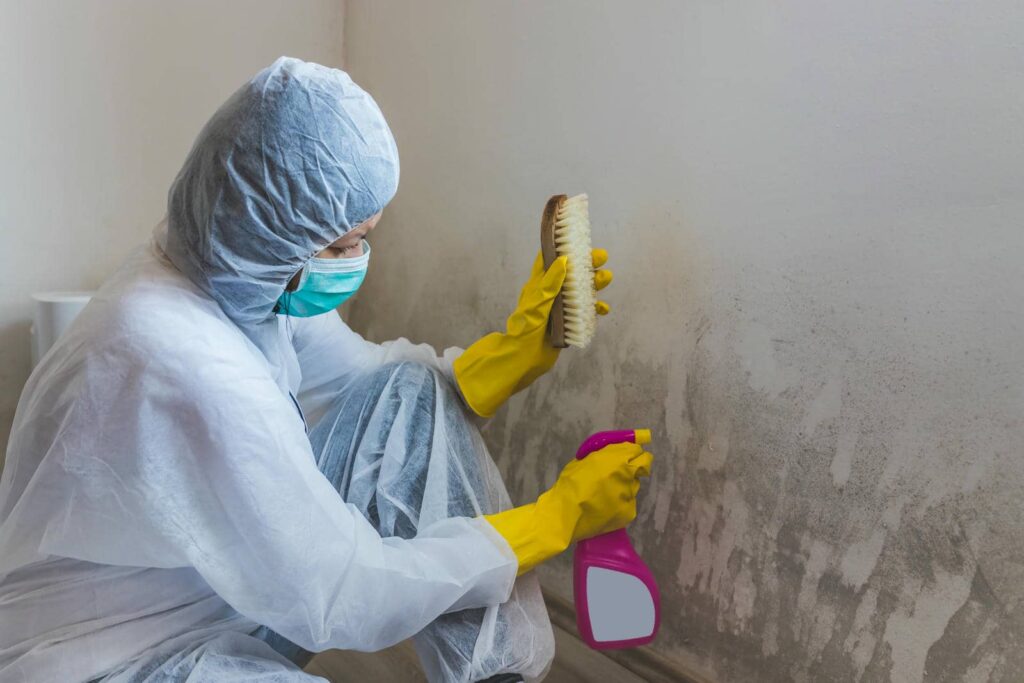
Don’t overlook the importance of personal protective equipment (PPE). Wear masks, gloves, and goggles to safeguard yourself against mold exposure. This protects your health and reassures others involved in the process that safety is a priority.
Additionally, consider using air filtration systems to maintain good air quality while you work. HEPA filters can capture airborne mold spores, minimizing the risk of inhalation.
Removing Affected Materials
Removing affected materials is a critical step in the mold remediation process after flooding. When water-damaged items, like drywall, carpets, and insulation, harbor mold, you need to act quickly.
First, identify materials that can’t be salvaged. The more porous the material, the higher the likelihood of mold growth. For effective mold removal, remove these items carefully to minimize spore spread.
Once you’ve removed the affected materials, proper material disposal is essential. Seal items in plastic bags before transporting them to prevent cross-contamination. Check local regulations for disposal guidelines, as some materials may require special handling.
It’s important to document the removal process, as this can help with insurance claims and future prevention efforts.
Cleaning and Disinfecting Surfaces
Once you’ve successfully removed affected materials, the next critical step involves cleaning and disinfecting surfaces to eliminate any remaining mold spores and prevent future growth.
Start by selecting effective cleaning agents that are suitable for the surfaces you’re treating. Common options include bleach solutions and commercial mold removers, which can effectively kill mold on non-porous surfaces.
For porous materials, consider specialized surface treatments designed to penetrate and inhibit mold growth. Thoroughly scrub all surfaces, ensuring you pay special attention to corners, crevices, and hidden areas where mold might thrive.
After cleaning, rinse the surfaces with clean water to remove any residue from the cleaning agents.
Finally, allow the surfaces to dry completely, as moisture is mold’s best friend.
Monitoring and Prevention Strategies
How can you ensure that your home remains mold-free after remediation? First, establish effective humidity control. Keep indoor humidity below 60% by using dehumidifiers or air conditioners, especially in damp areas like basements.
Regularly check humidity levels with a hygrometer to stay ahead of potential mold growth.
Next, enhance air circulation throughout your home. Open windows when the weather permits, and use fans to promote airflow in stagnant areas.
This helps prevent moisture buildup, which is vital for mold prevention.
You should also inspect your property regularly for signs of water leaks or condensation, addressing any issues promptly.
Additionally, consider investing in air purifiers equipped with HEPA filters, which can capture mold spores and improve indoor air quality.
Frequently Asked Questions
How Long Does It Typically Take for Mold to Grow After Flooding?
Mold growth can start within 24 to 48 hours after flood damage occurs. If you don’t address the moisture promptly, you’re likely to face significant mold issues, making swift action essential for your health and safety.
Can I Stay in My Home During the Mold Remediation Process?
Staying in your home during mold remediation is like dancing in a storm; it’s risky. For mold safety, consider home assessments first. If professionals deem it safe, you might remain, but caution is essential.
What Are the Health Risks Associated With Mold Exposure?
Mold exposure can lead to various health effects, including respiratory issues, allergic reactions, and skin irritation. You might experience mold symptoms like coughing, sneezing, or headaches, impacting your overall well-being and comfort in your environment.
Are There Any DIY Mold Remediation Methods I Can Safely Use?
Yes, you can use natural remedies like vinegar and baking soda as effective cleaning solutions. They’re safe, non-toxic options for tackling mold. Just ensure proper ventilation and wear protective gear while cleaning to stay safe.
How Can I Tell if Mold Is Completely Removed?
Imagine inspecting your home after a recent mold scare. To confirm mold’s gone, use mold inspection techniques like visual assessments and employ mold testing methods, ensuring the air quality meets safety standards before settling back in.
Review
Effective mold remediation after flooding is essential for your safety and health. By evaluating water damage, establishing containment, removing affected materials, cleaning surfaces, and implementing monitoring strategies, you can greatly reduce mold risks. Isn’t it worth taking these steps to protect your home and loved ones? Remember, proactive measures can make all the difference in preventing mold growth and ensuring a safe living environment for everyone. Don’t wait—act decisively to safeguard your space.
Recent Posts
What Is Soot Odor Mold Restoration?
After a kitchen fire leaves soot on your walls and a musty smell in the
What Repairs Stop Mold After Water Damage
To Stop Mold After Water Damage, you need to fix the moisture source first, then
Why Does Leak Water Damage Cause Mold?
Like a slow leak in a ship’s hull, water damage in your home keeps feeding