
Contents
Just like a detective sifts through clues at a crime scene, you must scrutinize your home for signs of black mold after water damage. Mold can hide in plain sight, thriving in damp environments, and it poses serious health risks. Knowing where to look and what to look for is essential. Are you aware of the common areas that might harbor this hidden menace? Let’s explore some effective strategies to safeguard your space.
Key Takeaways
- Inspect areas with discoloration or peeling paint, as they often indicate hidden moisture conducive to black mold growth.
- Use a moisture meter to check for dampness behind appliances and under sinks where leaks may remain unnoticed.
- Look for musty odors in basements, bathrooms, and kitchens, which may signal trapped moisture and mold presence.
- Regularly examine HVAC systems and air ducts for visible mold and ensure proper airflow to reduce humidity levels.
- Conduct thorough inspections for irregular stains or dark spots on walls and ceilings, as these are common indicators of mold.
Understand the Signs of Water Damage
While many homeowners may overlook the initial signs of water damage, recognizing them early can prevent more serious issues down the line.
First, pay attention to water damage indicators like discoloration on walls or ceilings, which often signals hidden leaks. You might also notice peeling paint or warped surfaces—these are clear warning signs that moisture is present.
Utilizing moisture detection methods can enhance your awareness. A simple moisture meter can help you gauge the dampness in various materials, pointing you toward potential problems.
If you detect musty odors, that’s another red flag; it often indicates trapped moisture, creating an environment conducive to mold growth.
Inspect Common Areas for Mold Growth
When inspecting for mold growth, focus on common areas prone to moisture.
Check basements and crawlspaces, as well as bathrooms and kitchens, where leaks often occur.
Additionally, examine walls and ceilings for any signs of discoloration or dampness that could indicate mold presence.
Check Basements and Crawlspaces
Since basements and crawlspaces are often dark, damp environments, they can become prime locations for mold growth after water damage.
To effectively manage moisture and prevent mold in these areas, you should conduct regular inspections.
Look for:
Visible Mold: Check for any dark spots or fuzzy growth on surfaces.
Musty Odors: Strong, unpleasant smells can indicate mold presence, even if you can’t see it.
Water Damage: Inspect for signs of previous leaks or water intrusion, which can foster mold.
Examine Bathrooms and Kitchens
To effectively prevent mold growth in bathrooms and kitchens, you need to be vigilant in your inspections.
Start by checking areas where moisture tends to accumulate, such as around sinks, tubs, and shower stalls. Make certain your bathroom ventilation is adequate; without proper airflow, humidity can linger, fostering mold growth.
In the kitchen, inspect plumbing for leaks or drips that can lead to dampness. Pay attention to cabinetry under the sink, as water can pool unnoticed.
Regularly clean and dry these areas to minimize moisture. If you spot any discoloration or a musty smell, act quickly to address the issue.
Inspect Walls and Ceilings
Many homeowners overlook the importance of inspecting walls and ceilings for signs of mold growth after water damage.
Conducting a thorough wall inspection is essential for effective mold detection. Start by checking these areas:
- Look for discoloration or stains on the surface.
- Check for peeling or bubbling paint, which can indicate moisture trapped underneath.
- Pay attention to any musty odors, signaling potential mold presence.
Check for Hidden Moisture Sources
While you may have addressed visible water damage, hidden moisture sources can still pose a considerable risk for black mold growth. It’s crucial to conduct a thorough inspection of areas that often go overlooked, such as behind appliances, under sinks, and within wall cavities.
These hidden spots can trap moisture, creating an ideal environment for mold proliferation.
To enhance mold prevention and ensure effective moisture control, check for leaks in plumbing and HVAC systems that mightn’t be immediately noticeable. Pay attention to condensation on windows and walls, as this is a telltale sign of excess humidity.
Don’t forget to examine your home’s foundation and crawlspaces, as these areas can harbor moisture issues too.
Use a Moisture Meter for Accurate Readings
A moisture meter is an essential tool for accurately evaluating the humidity levels in your home, especially after experiencing water damage.
Using this device can help you identify hidden moisture that might contribute to black mold growth.
To ensure you choose the right moisture meter types and achieve peak reading accuracy, consider the following:
Pin-type meters: These use metal probes to penetrate surfaces and measure moisture levels directly.
Pinless meters: These offer non-invasive readings by emitting electromagnetic signals to detect moisture within materials.
Hygrometers: These measure the humidity in the air, providing a broader picture of your environment.
Look for Discoloration on Walls and Ceilings
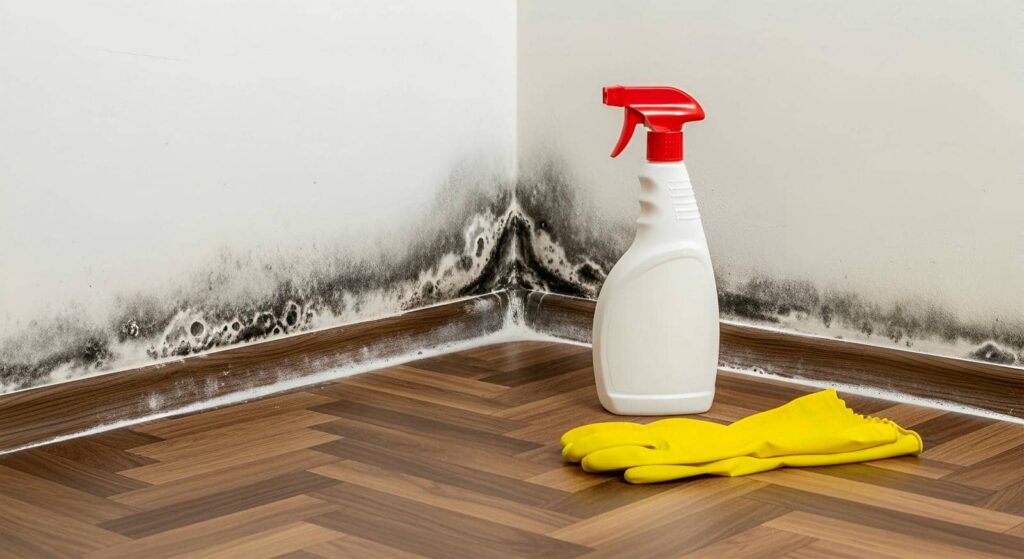
When inspecting for black mold, pay close attention to any stains or spots on your walls and ceilings; these can indicate moisture intrusion and potential mold growth.
Additionally, note any texture changes in the surfaces, as this may suggest a developing mold issue beneath the paint or drywall.
Identifying these visual signs early can help you address the problem before it escalates.
Stains and Spots
Detecting black mold often starts with a careful inspection of your walls and ceilings for any stains or spots, as these discolorations can indicate moisture accumulation.
Pay attention to these vital signs:
- Color Variations: Look for dark or greenish-brown spots, which are common indicators of mold.
- Size and Shape: Irregularly shaped stains may signal mold presence; uniform spots can indicate other issues.
- Location: Stains near plumbing or windows often suggest leaks, creating an environment ripe for mold growth.
Once you identify these stains, you can implement effective mold removal techniques and develop prevention strategies to keep your home safe.
Staying vigilant about these signs helps foster a healthier living environment for you and your loved ones.
Texture Changes
After identifying stains and spots on your walls and ceilings, it’s important to examine texture changes that may signal mold growth.
Conduct a thorough surface inspection, focusing on any areas where the texture appears altered. Pay attention to bulging, peeling, or flaking, as these may indicate moisture retention conducive to mold development.
Use texture analysis to differentiate between normal wear and potential mold issues. If you notice fuzzy or slimy patches, this is a strong indication of mold presence.
Being proactive in checking these changes helps you maintain a healthy environment and fosters a sense of belonging and safety within your home.
Act quickly to address any issues you find; your well-being depends on it.
Pay Attention to Musty Odors
How can you tell if your home has hidden mold? One of the most telling signs is the presence of musty smells. These odors often indicate moisture and potential mold growth, making them a significant clue in your detection efforts.
When you notice musty smells, consider these possible odor sources:
Water-damaged areas: Check places like basements, ceilings, and behind walls.
Damp fabrics: Look at curtains, carpets, and upholstery that may have absorbed moisture.
Hidden leaks: Inspect plumbing fixtures and appliances for undetected leaks.
If you detect any of these musty odors, it’s essential to act quickly. Ignoring them can lead to more significant mold problems that affect your health and home.
Addressing moisture issues promptly will help you maintain a safe and welcoming environment for you and your loved ones. Remember, the sooner you investigate, the better you can protect your home.
Examine HVAC Systems and Air Filters
To identify potential black mold growth, you need to inspect your HVAC system and air filters carefully.
Regularly changing filters is essential, as clogged or damp filters can harbor mold spores.
Additionally, look for any signs of moisture in the air ducts, as this can indicate a breeding ground for mold.
Inspect Air Ducts Thoroughly
While evaluating the aftermath of water damage, it’s crucial to inspect air ducts thoroughly, as these systems can harbor mold spores and contribute to air quality issues.
Addressing duct cleaning isn’t just about cleanliness; it’s about ensuring a healthy living environment. Here are key steps to follow:
Look for visible mold: Check for any discoloration or dampness around the ducts.
Assess airflow: Notice if some rooms feel stuffy or if airflow seems obstructed.
Schedule professional cleaning: If you suspect mold presence, consider hiring a certified HVAC technician.
Change Filters Regularly
After inspecting air ducts, the next step in maintaining a healthy indoor environment involves changing filters regularly.
Your HVAC system’s air filters play an important role in sustaining air quality, effectively trapping dust, allergens, and potential mold spores. Ignoring filter maintenance can lead to increased airborne contaminants, which may foster black mold growth.
It’s vital to check and replace filters every one to three months, especially after water damage. This not only protects your health but also enhances the efficiency of your HVAC system.
By prioritizing filter changes, you create a safer living space for yourself and your loved ones, fostering a sense of belonging in a clean, healthy environment.
Don’t underestimate the power of simple maintenance!
Look for Moisture Signs
Identifying moisture signs is essential in preventing black mold growth after water damage.
One of the key areas to examine is your HVAC system and air filters. These components can harbor moisture retention, creating a conducive environment for mold.
Here’s what you should look for:
- Damp or musty odors: A sign of trapped moisture.
- Condensation on ducts: Indicates high humidity levels that need control.
- Dirty air filters: Accumulation can promote mold growth.
Identify High-Risk Areas in Your Home
To effectively tackle the risk of black mold in your home, it’s essential to pinpoint high-risk areas that are particularly vulnerable to moisture accumulation.
Start by conducting a thorough water damage assessment, focusing on spaces like basements, bathrooms, and kitchens. These areas often experience leaks or humidity, making them prime candidates for mold growth.
Check for any signs of water intrusion around appliances, under sinks, and near windows.
Don’t overlook areas behind walls or under carpets, as hidden moisture can lead to severe mold problems.
Implementing mold prevention strategies, such as improving ventilation and using dehumidifiers, can greatly reduce these risks.
Conduct a Visual Inspection After Water Cleanup
Once you’ve completed water cleanup, conducting a visual inspection is essential to ensure no hidden mold is lurking in your home.
This step is important for effective mold prevention, ensuring you identify any potential issues early on.
During your inspection, focus on these key areas:
Walls and ceilings: Look for discoloration or peeling paint, which may indicate moisture retention.
Floors and carpets: Check for damp spots or water-damaged materials that could harbor mold.
HVAC systems: Inspect vents and ducts, as they can spread mold spores throughout your home.
Consult a Professional Mold Inspector
Even after a thorough visual inspection, hidden mold can still pose a risk to your health and property. That’s why consulting a professional mold inspector is essential.
These experts employ advanced inspection techniques to detect mold that you might overlook. They use tools like moisture meters and thermal imaging to identify damp areas, which are prime breeding grounds for mold.
Professional mold inspectors find existing mold and assess conditions that may lead to future growth. Their expertise is invaluable for effective mold remediation, ensuring you address not just the symptoms but the root causes.
By bringing in a specialist, you’re investing in the safety and longevity of your home. This collaborative approach fosters a sense of community, as you work together to safeguard your living environment.
Don’t hesitate to reach out for professional help; it’s a proactive step towards creating a healthier space for you and your loved ones.
Frequently Asked Questions
How Quickly Can Black Mold Develop After Water Damage?
Black mold can develop within 24 to 48 hours after water damage, depending on factors like humidity, temperature, and material types. Understanding this mold growth timeline helps you take timely action to prevent serious health risks.
Can Black Mold Grow Behind Walls or Under Flooring?
Yes, black mold can grow behind walls or under flooring, creating hidden mold. Conducting a thorough wall inspection helps identify potential growth areas, ensuring you address moisture issues before they escalate into a more significant problem.
What Health Risks Are Associated With Black Mold Exposure?
Exposure to black mold can lead to various health risks, including respiratory issues and allergic reactions. Long-term effects may worsen symptoms, so it’s essential that you recognize black mold symptoms early to protect your well-being.
Is It Safe to Clean Black Mold Myself?
Cleaning black mold yourself can be safe if you use proper cleaning methods and follow safety precautions. Make sure you wear protective gear and ventilate the area to minimize health risks and effectively manage the situation.
How Can I Prevent Mold Growth After Water Damage?
To prevent mold growth after water damage, use mold-resistant materials and ensure proper ventilation. Think of it as creating a fortress against mold—strong, safe, and ready for anything nature throws your way!
Recap
Detecting black mold after water damage is essential for your health and safety. By understanding the signs, inspecting common areas, and using moisture meters, you can proactively identify potential issues. Don’t overlook hidden sources or high-risk areas; they can harbor unseen dangers. Regular visual inspections and professional consultations ensure thoroughness. Protect your home, protect your family, and take action now to maintain a safe, healthy environment for everyone who lives there.
Recent Posts
What Is Soot Odor Mold Restoration?
After a kitchen fire leaves soot on your walls and a musty smell in the
What Repairs Stop Mold After Water Damage
To Stop Mold After Water Damage, you need to fix the moisture source first, then
Why Does Leak Water Damage Cause Mold?
Like a slow leak in a ship’s hull, water damage in your home keeps feeding