
Contents
Imagine your home as a ship steering through stormy seas; without proper maintenance, it risks sinking. Mold, often a silent intruder, can compromise your ship’s integrity if not managed correctly. Understanding the best strategies for residential mold remediation is vital to maintaining a healthy living environment. By addressing moisture sources and evaluating mold growth, you can chart a course toward effective solutions. But what steps should you take to ensure your home stays afloat and mold-free?
Key Takeaways
- Identify and address moisture sources promptly to prevent mold growth in vulnerable areas like bathrooms and basements.
- Use personal protective equipment (PPE) such as N95 respirators and gloves when handling moldy materials.
- Remove and properly dispose of contaminated materials, sealing them in heavy-duty plastic bags to contain spores.
- Clean and disinfect affected surfaces with effective solutions like bleach or hydrogen peroxide, ensuring proper contact times.
- Thoroughly dry the area using dehumidifiers and improve ventilation to maintain low humidity levels and inhibit mold regrowth.
Identify the Source of Moisture
When addressing mold issues in your home, identifying the source of moisture is essential, as it lays the foundation for effective remediation.
Start by inspecting common moisture sources like bathrooms, kitchens, and basements, where humidity levels often rise due to daily activities. Pay close attention to water leaks, which can originate from plumbing fixtures, roofs, or faulty windows. Even small leaks can create an environment conducive to mold growth if left unchecked.
Utilize a moisture meter to measure dampness in walls and floors, providing objective data to pinpoint problem areas.
Don’t overlook external factors, such as poor drainage or landscaping that directs water toward your home. By systematically evaluating these potential moisture sources, you’ll gain valuable insights into where mold thrives.
This proactive approach helps you tackle existing mold and prevent future outbreaks, fostering a healthier living environment for you and your family.
Assess the Extent of Mold Growth
After identifying the source of moisture, the next step involves evaluating the extent of mold growth in your home. This assessment is essential for effective remediation.
You’ll want to employ specific mold inspection techniques and growth identification methods to accurately gauge the problem.
Visual Inspection: Start by examining areas prone to moisture, such as basements, bathrooms, and behind appliances. Look for discoloration or a musty odor.
Moisture Meters: Utilize moisture meters to identify hidden water sources that mightn’t be visible. High readings indicate potential mold growth areas.
Air Sampling: Consider air sampling to detect mold spores in the air. This method helps you understand the mold’s presence and concentration levels within your home.
Use Personal Protective Equipment (PPE)
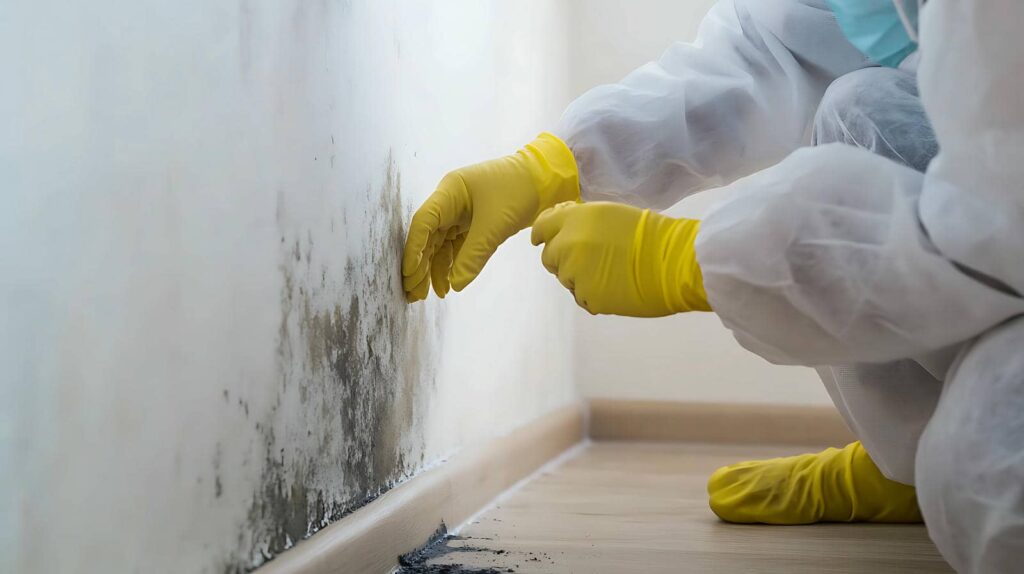
When tackling mold remediation, using appropriate personal protective equipment (PPE) is vital for your safety and health.
You’ll need to understand the essential PPE items required, how to use them properly, and the safety precautions to take throughout the process.
This discussion will equip you with the knowledge to minimize risks effectively while addressing mold issues in your home.
Essential PPE Items
While tackling mold remediation in residential settings, ensuring your safety through the use of appropriate personal protective equipment (PPE) is essential.
Mold exposure can pose significant health risks, making it vital to prioritize effective mold protection. Here are three essential PPE items you should consider:
N95 Respirator: This mask filters out airborne particles, providing vital protection against mold spores.
Safety Goggles: Protect your eyes from mold exposure and any contaminants that may be stirred up during the remediation process.
Gloves: Use durable, waterproof gloves to shield your skin from mold and potentially harmful chemicals.
Proper PPE Usage
Using personal protective equipment (PPE) correctly is essential for effective mold remediation. Adhering to PPE guidelines ensures your safety and enhances the remediation process.
Start with a high-quality respirator to protect against airborne spores, and don’t forget gloves and goggles to shield your skin and eyes. When using these items, inspect for any damage before each use, assuring they’re effective.
After completing your work, follow proper disposal methods for contaminated PPE to prevent further mold exposure. Properly bag and seal these items, then discard them in accordance with local regulations.
Safety Precautions Explained
Personal protective equipment (PPE) serves as the frontline defense in mold remediation, ensuring your safety amid hazardous conditions.
Using appropriate PPE is vital to mitigate the health effects associated with mold exposure. Here are three essential items you should always wear:
- N95 Respirator: This filters out airborne particles, protecting your lungs from mold spores.
- Goggles: Protect your eyes from irritants and spores that could lead to discomfort or infection.
- Gloves: Use durable gloves to prevent skin contact with mold and cleaning agents.
Incorporating these mold-prevention techniques safeguards your health and fosters a sense of belonging in a community that values safety and well-being during remediation efforts.
Contain the Affected Area
To effectively contain the affected area during mold remediation, you need to seal off contaminated zones.
Utilize plastic barriers to create a physical separation, preventing spores from spreading to unaffected spaces.
This strategic containment is essential for minimizing health risks and ensuring a successful remediation process.
Seal Off Contaminated Zones
When dealing with mold contamination, sealing off the affected zones is crucial for preventing spores from spreading to uncontaminated areas.
Effective mold containment techniques are essential for maintaining air quality management during remediation.
Here are three key actions you should take:
Identify Affected Areas: Clearly define the zones contaminated by mold to ensure you know where to focus your containment efforts.
Establish Barriers: Use appropriate materials to create barriers that will prevent spores from escaping the contaminated area.
Control Airflow: Verify that HVAC systems are turned off and sealed to avoid circulating contaminated air into clean spaces.
Use Plastic Barriers Effectively
After sealing off contaminated zones, using plastic barriers effectively becomes an important step in mold remediation. Proper plastic sheeting installation is vital to contain mold spores and prevent cross-contamination. You’ll want to ensure all seams are tightly sealed, and the edges are securely fastened to the surrounding surfaces.
To evaluate barrier effectiveness, consider the following factors:
| Factor | Importance | Evaluation Method |
|---|---|---|
| Seal Integrity | Prevents leakage of spores | Visual inspection |
| Coverage Area | Ensures full containment | Measure dimensions |
| Material Thickness | Determines durability | Compare specifications |
| Installation Quality | Affects overall performance | Peer review |
| Longevity | Impacts remediation duration | Monitor for wear |
Remove and Dispose of Contaminated Materials
Removing and disposing of contaminated materials is an essential step in effective mold remediation. You need to approach this task with care to ensure safety and prevent further contamination.
Here are three key mold disposal techniques to keep in mind:
Identify Contaminated Materials: Determine which items are unsalvageable, such as drywall, carpet, or insulation, and should be removed immediately.
Seal and Bag: Use heavy-duty plastic bags to seal contaminated materials securely. This prevents mold spores from escaping into the air during handling.
Proper Disposal: Follow local guidelines for hazardous waste disposal. Ensure that you’re disposing of the materials in a manner that complies with environmental regulations.
Effective contaminated material handling minimizes health risks and ensures your home remains safe.
Clean and Disinfect Surfaces
To effectively clean and disinfect surfaces after mold removal, you’ll need essential cleaning supplies that can tackle mold spores.
Employing effective disinfection techniques is vital to ensure you eliminate any remaining contaminants.
Additionally, implementing surface protection methods will help prevent future mold growth and maintain a healthy environment.
Essential Cleaning Supplies
When tackling mold remediation, having the right cleaning supplies on hand is essential for effectively disinfecting surfaces and ensuring a safe environment.
Choosing appropriate products supports mold-removal techniques and promotes overall hygiene. Here are three important cleaning supplies you should consider:
Mold-Killing Solution: Look for EPA-registered products specifically designed for mold removal. These cleaning product recommendations can target tough mold spores effectively.
Non-Abrasive Scrub Brushes: These allow you to scrub surfaces without damaging them, ensuring thorough cleaning.
Protective Gear: Wearing gloves, masks, and goggles is critical to protect yourself while cleaning.
Equipping yourself with these essentials creates a foundation for successful mold remediation and fosters a healthier living space.
Effective Disinfection Techniques
Effective disinfection techniques are essential for ensuring that surfaces are clean and free of mold spores and other harmful pathogens. Utilizing appropriate disinfection methods can greatly reduce the risk of mold recurrence. Consider the following table showcasing effective antimicrobial solutions:
| Disinfection Method | Active Ingredient | Contact Time |
|---|---|---|
| Bleach Solution | Sodium Hypochlorite | 10 minutes |
| Hydrogen Peroxide | H2O2 | 5-30 minutes |
| Quaternary Ammonium | Benzalkonium Chloride | 10 minutes |
| Vinegar Solution | Acetic Acid | 30 minutes |
| Essential Oils | Tea Tree Oil | 10 minutes |
Implementing these antimicrobial solutions ensures a thorough cleansing, contributing to a healthier living environment. Always follow manufacturer guidelines for best results.
Surface Protection Methods
After ensuring surfaces are thoroughly disinfected, protecting them from future mold growth becomes the next priority.
Implementing effective surface protection methods is essential to maintaining a healthy environment. You can consider the following surface treatment options:
Protective Coatings: These specialized coatings create a barrier against moisture, inhibiting mold growth.
Sealants: Applying sealants on porous materials helps prevent water intrusion, which can lead to mold.
Antimicrobial Treatments: These treatments kill existing mold spores and provide ongoing protection against future infestations.
Dry the Area Thoroughly
Thoroughly drying the area is essential for successful mold remediation, as excess moisture creates an ideal environment for mold growth. Start by identifying and addressing any sources of moisture, such as leaks or flooding.
Once you’ve eliminated these issues, focus on moisture control through effective drying methods. Use dehumidifiers and fans to enhance air circulation, which aids in evaporation.
Don’t forget about ventilation improvement; opening windows and doors can help airflow, further reducing humidity levels. Make certain that the affected area remains well-ventilated during the drying process, as stagnant air may prolong moisture retention.
Regularly check humidity levels with a hygrometer to make sure they stay below 60%. This proactive approach mitigates mold risk and fosters a healthier living environment.
Apply Mold Inhibitors
Applying mold inhibitors is an essential step in preventing future mold growth after remediation. By utilizing effective mold prevention techniques, you can safeguard your home against the recurrence of this pervasive problem.
Eco-friendly inhibitors protect your living space and contribute to a healthier environment.
Here are three effective strategies for applying mold inhibitors:
Choose Non-Toxic Products: Opt for eco-friendly inhibitors that are safe for your family and pets. These products offer powerful protection without harsh chemicals.
Apply Regularly: Make it a habit to reapply mold inhibitors in high-humidity areas, such as basements and bathrooms, to maintain their efficacy.
Combine with Ventilation: Ensure proper airflow in your home. Even the best inhibitors work best when combined with adequate ventilation to reduce moisture levels.
Monitor for Future Mold Growth
Even with effective mold inhibitors in place, vigilance is key to maintaining a mold-free environment. Regular monitoring is essential for mold growth prevention. You should inspect areas prone to moisture, such as basements, bathrooms, and kitchens, at least monthly.
Look for any signs of discoloration or a musty smell, as these could indicate hidden mold.
Humidity control plays an important role in this process. Keep indoor humidity levels between 30% and 60% by using dehumidifiers or air conditioners.
Invest in a hygrometer to measure humidity accurately. If levels exceed this range, take immediate action to reduce moisture, whether through ventilation or repair of leaks.
Establish a routine for checking your home’s vulnerable areas and take proactive measures.
Consult a Professional for Severe Cases
When mold growth becomes extensive or persistent, consulting a professional is crucial to ensure effective remediation and prevent health risks.
A professional assessment assures that you’re addressing the issue correctly and thoroughly, utilizing advanced mold remediation techniques tailored to your specific situation.
Here’s why you should consider reaching out to an expert:
Comprehensive Evaluation: Professionals conduct a thorough inspection to identify the extent of mold damage and underlying causes.
Targeted Strategies: They employ specialized mold remediation techniques that go beyond DIY methods, providing a more permanent solution.
Safety Protocols: Experts follow strict safety guidelines to protect you and your family from exposure to harmful spores during the remediation process.
Frequently Asked Questions
How Can I Prevent Mold Growth in My Home?
To prevent mold growth in your home, focus on humidity control. Use dehumidifiers, ensure proper ventilation, and routinely check for leaks. Implementing mold prevention tips like these can greatly reduce moisture and inhibit mold development.
What Health Risks Are Associated With Mold Exposure?
Mold exposure can lead to various health risks, including mold symptoms like coughing, sneezing, and respiratory issues. You should be aware of these effects, especially if you or your loved ones have pre-existing conditions.
How Long Does Mold Remediation Typically Take?
Imagine a clock ticking away as mold assessments unfold; typically, the remediation timeline spans a few days to weeks. Your home’s unique conditions dictate the pace, but thoroughness always trumps speed in ensuring lasting safety.
Are There DIY Mold Removal Solutions That Work?
Yes, there are DIY mold removal techniques that can be effective. You can use solutions like vinegar or hydrogen peroxide, which have proven cleaning properties. Just make certain you follow safety precautions and address the root moisture issue.
Will My Homeowners Insurance Cover Mold Remediation Costs?
Your homeowners’ insurance might cover mold remediation, but check your policy for specific mold insurance clauses and coverage limits, as these can vary considerably between providers and plans.
Wrap-Up
Effectively tackling mold in your home hinges on a systematic approach to remediation. Mold can develop in many homes, especially when moisture issues go unchecked. That’s why it’s important to stay alert and take preventive steps to control dampness and limit mold growth. By following these strategies, you’ll create a healthier living environment and help preserve your property’s value. If mold becomes difficult to manage, it’s best to contact a professional for help.
Recent Posts
5 Steps for Flood Water Recovery
When floodwater enters your space, you need to act in a strict sequence. Flood Water
How to Restore Water Damage After Flood
After a flood, you’re facing more than a little cleanup, and your first move is
7 Smoke Odor Removal Tips After Water Damage
Smoke odor after water damage can linger in places you’d never think to inspect first.