
Contents
Emergency Flood Cleanup is essential because after a flood, mold can start growing sooner than many people expect. You need to stop the water source first, then remove standing water and debris as quickly as possible. Next, dry walls, floors, and the air using fans and dehumidifiers to keep indoor humidity below 60%. Clean and disinfect all salvageable surfaces, and know when structural damage requires professional assistance—because the next few hours can make all the difference in preventing further damage and protecting your property.
Key Takeaways
- Shut off the water source safely and block further intrusion with temporary barriers or sandbags.
- Remove standing water quickly with pumps, wet vacs, mops, and buckets.
- Dry walls, floors, and air immediately using fans, dehumidifiers, and moisture monitoring.
- Clean and disinfect hard surfaces; discard porous materials that cannot be thoroughly cleaned.
- Call a licensed water damage professional if flooding affects structural materials, systems, or hidden moisture remains.
Take Immediate Steps to Stop Water Damage
As soon as it’s safe to enter, you need to stop additional water intrusion and reduce the spread of damage.
Locate the water source and shut off the supply at the main valve if you can do it without risk. If the source is external, block entry points with temporary barriers or sandbags.
Follow safety precautions before touching wet materials, especially near outlets, appliances, or gas equipment. Wear protective gear and confirm structural areas feel stable before moving through them.
Document visible damage for your records, but keep your focus on control, not cleanup. Prompt action limits saturation, protects building components, and helps your team regain a manageable space faster.
If you can’t isolate the source safely, contact a licensed professional or utility provider immediately.
Remove Standing Water and Debris
Start removing standing water as soon as the area is safe, using pumps, wet vacuums, mops, and buckets to clear each affected space quickly.
Prioritize water extraction from low points, corners, and hidden pockets where seepage lingers.
You should sort debris as you work, removing saturated insulation, broken materials, food waste, and contaminated personal items in sealed bags.
Keep pathways open so your crew can move efficiently and prevent slips.
Use gloves, boots, and eye protection, and treat sharp or unstable objects with caution.
Debris removal must follow local disposal rules, especially when floodwater may contain sewage or chemicals.
Work methodically, document what you remove, and stay coordinated with your team so everyone helps restore a safe, orderly environment without delay.
Dry Water-Damaged Walls, Floors, and Air
Once standing water is removed, you need to dry water-damaged walls, floors, and air immediately to limit mold growth and structural deterioration. Open windows only if outdoor humidity is low, and run fans to move air across wet surfaces.
Use dehumidifiers to support moisture control and keep indoor relative humidity below 60%. Remove baseboards, insulation, or flooring only when needed so hidden cavities can dry faster.
Lift carpet edges and separate materials to expose trapped moisture. Monitor progress with a moisture meter, because touch alone can miss residual dampness.
Your team should keep drying techniques consistent until structural materials return to safe readings. If you stay disciplined now, you’ll protect your space, reduce losses, and create a safer recovery environment for everyone involved.
Clean and Disinfect to Prevent Mold
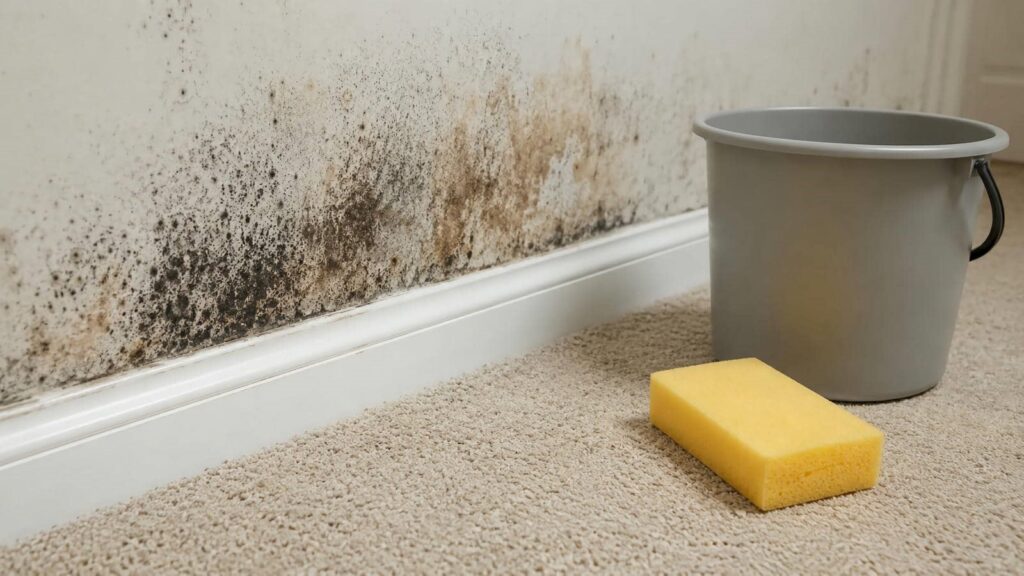
After drying reduces visible moisture, clean all affected surfaces promptly with soap and water, then disinfect hard, nonporous materials to suppress mold growth and microbial contamination.
You should scrub visible residue from tile, metal, plastic, and sealed wood, then rinse and apply an EPA-registered disinfectant exactly as labeled. Keep contact time intact; skipping it weakens disinfecting surfaces.
Use gloves, eye protection, and good ventilation while you work. Bag and discard porous items that can’t be fully cleaned, because retained contamination can seed new colonies.
As part of your mold prevention strategies, dry each cleaned area again so humidity doesn’t rebound. Wipe tools, buckets, and boots before moving to another room.
When you clean methodically, you protect your space and support everyone rebuilding with you.
When to Call a Water Damage Pro
Call a water damage pro when flooding has soaked structural materials, electrical systems, insulation, or HVAC components, or when contaminated water has entered the space.
You also need help if standing water persists, drywall sags, or odors suggest hidden moisture. A licensed team can perform a water damage assessment, identify affected assemblies, and map drying priorities before mold advances.
Check professional qualifications, insurance coverage, and restoration certifications so you’re working with people who know the standards your home deserves.
If you’re unsure about safety, shut off power to wet areas and wait for trained technicians.
Calling early helps you protect your household, reduce repair costs, and stay part of a community that handles emergencies with confidence and care.
Frequently Asked Questions
What Insurance Documents Should I Gather After Flood Damage?
Gather your insurance policy, photos and videos of damage, receipts, repair estimates, inventory lists, prior correspondence, and any police or emergency reports. You’ll streamline the claim process and support your coverage decision.
How Do I Safely Handle Contaminated Floodwater Exposure?
Wear protective gear, avoid contaminated surfaces, and wash exposed skin immediately. You shouldn’t touch floodwater with bare hands; instead, disinfect tools, isolate wet materials, and seek medical care if you’ve got cuts, fever, or symptoms.
Can I Salvage Electronics After Minor Flooding?
Yes, you can salvage some electronics after minor flooding if you power them off, disconnect them, and dry them promptly. You should assess flood damage, pursue electronic restoration, and rely on qualified technicians for safety.
What Signs Indicate Hidden Mold Behind Walls?
You’ll notice musty odors, peeling paint, warped drywall, staining, or recurring allergies. Use mold detection and moisture assessment to confirm hidden growth behind walls, especially after leaks, floods, or persistent humidity.
How Soon Should I Replace Soaked Insulation?
You should replace soaked insulation within 24 to 48 hours if it can’t dry completely. You’ll need prompt insulation removal and effective drying techniques, because damp material traps moisture, supports mold, and compromises your building’s thermal performance.
Final Thoughts
Act fast when floodwater hits. Shut off the source, remove standing water, and clear debris before damage spreads. Dry walls, floors, and air quickly, then clean and disinfect every salvageable surface to stop mold growth. Remember, an ounce of prevention is worth a pound of cure. If structural materials are compromised or odors linger, call a water damage professional right away. Your prompt action can limit losses and protect your health.
Recent Posts
What Repairs Stop Mold After Water Damage
To Stop Mold After Water Damage, you need to fix the moisture source first, then
Why Does Leak Water Damage Cause Mold?
Like a slow leak in a ship’s hull, water damage in your home keeps feeding
Ceiling Leak Water Damage Mold Repair Guide
You notice a ceiling stain the same day a drip starts, and that coincidence matters