
Contents
After flooding, Removing Smoke Odor requires a methodical cleanup plan because smoke odor can linger in porous materials, hidden cavities, and damp debris. You’ll have to remove standing water, dry the structure, and neutralize residue before the smell sets in deeper. The right sequence matters because missed moisture can keep feeding odor problems long after surfaces look clean. What you do next can make the difference between a temporary fix and a lasting one.
Key Takeaways
- Remove standing water immediately with pumps or wet vacs to stop moisture from driving smoke odor deeper into materials.
- Discard soaked insulation, drywall, and other porous materials that cannot be cleaned and keep trapping smoke residue.
- Dry the area thoroughly with fans and dehumidifiers, aiming for good airflow and indoor humidity around 40%–60%.
- Clean soot from hard surfaces and washable items using HEPA vacuuming and mild detergent or vinegar solutions.
- Use air scrubbers, check hidden cavities and HVAC, and call professionals if odor persists after drying and cleaning.
What Causes Smoke Odor After Flood Damage?
Smoke odor after flood damage usually comes from soot, ash, and other combustion residues that water spreads into porous materials.
You’re dealing with smoke sources that may have burned before or during the flood, and the residue can wick into drywall, insulation, carpet padding, wood, and fabrics.
Moisture reactivates those particles, so odor persistence gets worse when humidity stays high.
You may also smell trapped volatile compounds in hidden cavities, where air movement is weak and cleanup is incomplete.
If your space has shared walls or HVAC connections, odors can travel and settle in nearby rooms, making the problem feel bigger than one area.
You’re not imagining it; the contamination is real, and it needs targeted removal, not masking.
Remove Standing Water and Wet Materials Fast
You need to remove standing water immediately, because trapped moisture keeps smoke residues active and drives odors deeper into building materials.
Dispose of wet materials that can’t be fully cleaned and dried, including insulation, carpet padding, and damaged drywall.
Then dry hidden moisture in wall cavities, subfloors, and voids with airflow and dehumidification to stop odor from persisting.
Remove Standing Water
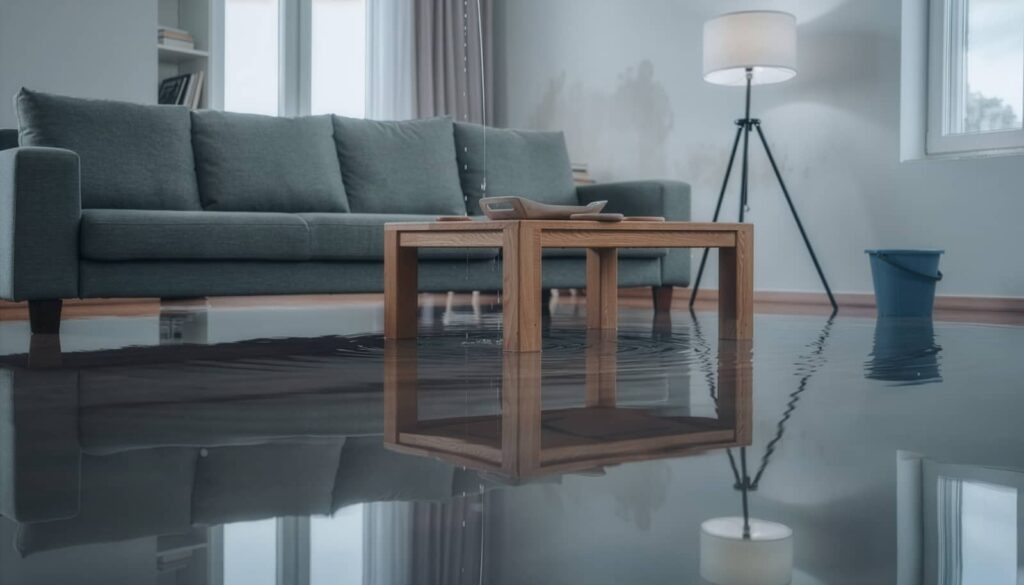
Start by pumping out standing water as quickly as possible, then pull saturated carpets, padding, curtains, and other wet materials from the area. You’ll limit water damage and reduce the smoke particles that cling to damp surfaces.
Use a wet vac, sump pump, or portable pump, and keep hoses directed outdoors. Open drains only after you confirm they’re clear.
If the floor stays wet, set fans to move air across the surface and run a dehumidifier nearby. Check baseboards, walls, and hidden corners for trapped moisture, since lingering water slows drying and worsens odor.
Act fast, stay methodical, and work as a team with anyone helping you. Fast removal also supports flood prevention by reducing the chance of deeper saturation and secondary damage.
Dispose Of Wet Materials
Dispose of soaked materials as soon as possible to stop odor from settling in and spreading. You should bag carpets, padding, drywall, insulation, paper goods, and upholstered items that stayed wet after flooding.
Remove them from the structure fast so smoke residues and moisture don’t keep feeding odor. Use gloves and a mask, and keep the path clear so your team can work safely and stay organized together.
Mark salvageable items before material disposal, then separate waste from anything you’ll clean later. This step supports mold prevention because damp porous materials hold contaminants and can worsen indoor air quality.
Load debris into sealed containers or heavy-duty bags, and take them to approved disposal sites promptly. The faster you clear wet materials, the sooner your space feels safe again.
Dry Hidden Moisture
Remove standing water first, then open up hidden cavities so trapped moisture can dry before it locks smoke odor into framing, subflooring, and insulation.
You’ll need moisture detection tools to find damp pockets behind baseboards, under cabinets, and inside wall assemblies.
Pull wet padding, lift edges of flooring, and speed airflow with fans and dehumidifiers.
Use ventilation techniques that move dry air across surfaces, not just around the room.
If you’re part of a cleanup crew, coordinate checks so no one misses a saturated bay.
Keep monitoring until readings stabilize, because odor control starts with dryness.
When you dry hidden moisture fast, you protect the structure, reduce microbial growth, and give your space a cleaner reset after flooding.
Clean Soot and Smoke Residue Thoroughly
Use a dry-cleaning method first to lift loose soot from hard surfaces without spreading it into pores or seams.
Vacuum hidden residue from cracks, baseboards, vents, and other concealed areas with a HEPA-equipped unit.
Then wash walls, ceilings, and washable fabrics with the right detergent so you remove residue before odors set in.
Dry Clean Surfaces
Start by dry cleaning every affected surface to lift soot and smoke residue before any wet cleaning.
Choose tools matched to the surface materials: use a soot sponge on painted walls, microfiber on sealed counters, and a soft brush on textured trim.
Work from top to bottom so you don’t drag contamination onto already cleaned areas.
Use short, controlled passes with cleaning techniques that remove residue without grinding it in.
Replace dirty cloths often, and fold them to expose a clean face.
If you see streaking, stop and switch to a cleaner tool.
Keep your pressure light; strong scrubbing can damage finishes and spread particles.
When you dry clean correctly, you help your space feel restored and ready for the next step.
Vacuum Hidden Residue
After dry cleaning, vacuum the remaining soot and smoke residue from carpets, upholstery, vents, and other hidden areas.
Use a HEPA-equipped vacuum and slow, overlapping passes to lift fine particles without stirring them into the air. Focus on seams, baseboards, under furniture, and other hidden spaces where odor settles.
Change attachments as needed: a crevice tool for edges, a soft brush for fabric, and a narrow nozzle for vents.
If you’re part of a cleanup team, follow the same vacuum techniques across each room so everyone works consistently.
Empty or replace the bag or canister often to keep suction strong. This step helps you and your household remove trapped residue, reduce lingering smell, and move closer to a cleaner, safer space.
Wash Walls And Fabrics
Wash walls, ceilings, trim, and washable fabrics with the right cleaner to remove the soot and smoke film that vacuuming leaves behind. Mix a mild detergent or trisodium phosphate substitute in warm water, then test a small area first.
Use microfiber cloths and work from top to bottom so grime doesn’t drip onto cleaned sections. Rinse often and change solution when it darkens.
For painted surfaces, choose wall cleaning techniques that lift residue without dulling the finish.
For curtains, bedding, and slipcovers, follow fabric treatment methods on the care label, then wash in the hottest safe water. Air-dry items fully.
Repeat if odor lingers, and keep windows open so your home feels fresher and more like yours.
Remove Smoke Odor With Safe Cleaners
Use safe, non-abrasive cleaners to break down smoke residue without spreading it deeper into walls, floors, or fixtures. You can mix mild dish soap with warm water, or choose natural cleaners like vinegar and baking soda for lighter odor control.
Test each solution on a hidden spot first, then wipe with clean microfiber cloths and rinse well. For stubborn film, use smoke eliminators labeled for post-fire cleanup, and follow the dilution instructions exactly.
Keep your cleaning passes light so you don’t drive residue into porous surfaces. Work room by room, and replace dirty solution often so you’re not reapplying odor.
When you clean with care, you help your space feel safe, familiar, and ready for everyone to breathe easier again.
Dry Hidden Areas That Trap Odors
Moisture trapped behind walls, under flooring, and inside cabinets can keep smoke odor active long after visible surfaces dry, so you need to dry those hidden areas thoroughly.
Check baseboards, toe kicks, crawlspaces, and wall cavities for hidden humidity. Open access panels and remove damp insulation, cardboard, or fabric that can hold odor sources.
If you can safely expose a wet area, wipe it down and let it dry to the touch before closing it up. Watch for staining, softness, or a persistent stale smell; those signs mean moisture’s still present.
When you dry these concealed spaces fully, you cut off the trapped smoke compounds that linger and help your home feel clean again.
Use Fans, Dehumidifiers, and Air Scrubbers
Once hidden areas are dry, keep air moving so smoke particles don’t settle back into the room.
Place fans to create cross-ventilation: aim one toward the exit and another to pull air through damp rooms. Good fan placement helps clear lingering odor faster and keeps you from recycling stale air.
Run dehumidifiers to hold indoor humidity near 40% to 60%; correct dehumidifier settings reduce moisture that traps odor compounds in drywall, flooring, and fabrics.
Add air scrubbers with HEPA and activated carbon filters to capture fine soot and absorb smoke gases.
Keep doors open when you can, and clean filters often.
You’re not just drying space—you’re restoring a cleaner, safer home environment for everyone inside.
When to Call Smoke Odor Removal Pros
If smoke odor still lingers after drying, cleaning, and filtration, it’s time to bring in a smoke odor removal pro. You may be dealing with soot in wall cavities, HVAC ducts, subflooring, or insulation, and those hidden sources won’t clear on their own.
A professional assessment helps you identify contamination levels, moisture risks, and structural materials that need specialized treatment. In smoke restoration, pros use thermal fogging, hydroxyl units, and targeted sealants to neutralize odor at the source.
If you notice persistent odor, eye irritation, or residue after wiping, don’t keep guessing. Call a team that understands your situation and can restore your space safely. You’ll get a cleaner result and faster return to normal.
Frequently Asked Questions
How Long Does Smoke Odor Usually Last After Flooding?
You’ll usually notice smoke odor for weeks or months after flooding, especially with severe flood damage. Fast odor removal depends on drying, cleaning, and ventilation; untreated materials can keep releasing odor for much longer.
Can Air Fresheners Permanently Remove Smoke Smells?
No, air fresheners won’t permanently remove smoke smells; you’re mostly doing scent masking. They may improve air quality briefly, but you’ll need source removal, cleaning, and ventilation to eliminate trapped odor compounds.
Does Insurance Cover Smoke Odor Cleanup Costs?
Usually, yes, but it depends—like a flashlight cutting through smoke, your policy may cover cleanup. Check your insurance policies for smoke damage wording, exclusions, and coverage limits; you’ll avoid surprises and protect your home.
Is It Safe to Stay Home During Smoke Odor Removal?
You shouldn’t stay home during smoke odor removal if you’ll have smoke exposure. You can face health risks, especially with poor ventilation or ozone treatments. Leave the area, and return only when it’s fully cleared.
How Do I Prevent Smoke Odor From Returning?
To prevent smoke odor from returning, you’ll seal hidden sources, use odor absorption techniques, and control moisture fast—then maintain long term prevention with HVAC filters, regular cleaning, and airtight storage so you stay protected.
Wrap-Up
If you act fast, you can stop smoke odor from settling in after flooding. Remove wet materials, clean soot before it bonds, and dry every hidden cavity. Use fans, dehumidifiers, and air scrubbers to control moisture and improve air quality. Check whether lingering odor comes from trapped residue or deeper damage. If you’ve done the basics and the smell stays, bring in a pro. That’s the safest way to confirm what’s really causing it.
Recent Posts
How to Restore Water Damage After Flood
After a flood, you’re facing more than a little cleanup, and your first move is
7 Smoke Odor Removal Tips After Water Damage
Smoke odor after water damage can linger in places you’d never think to inspect first.
What Removes Odor After Water Damage?
After water damage, you need to remove the source of the smell, not just mask