
Contents
Many people underestimate the rapidity with which mold can proliferate after water damage. It’s essential to act quickly and effectively to prevent further health risks and property damage. Understanding the steps involved in mold remediation can make a significant difference. From evaluating the extent of growth to implementing preventive measures, each step is important in ensuring a safe environment. Let’s explore how you can tackle this issue efficiently.
Key Takeaways
- Conduct a thorough inspection for mold signs using visual checks and moisture meter readings to assess the extent of the damage.
- Ensure safety by wearing appropriate PPE, including gloves, masks, and goggles, while maintaining proper ventilation during the remediation process.
- Remove affected materials like drywall or insulation using proper techniques and dispose of them in heavy-duty plastic bags to contain spores.
- Clean and disinfect surfaces with mold cleaning solutions, ensuring areas are dry before applying mold inhibitors to prevent regrowth.
- Monitor moisture levels and inspect vulnerable areas regularly to prevent future mold growth and consider professional help for extensive contamination.
Assessing the Extent of Mold Growth
Before you can effectively remediate mold after water damage, you need to evaluate the extent of mold growth in your space. Start by employing mold identification techniques, such as visual inspections and moisture meter readings, to locate potential infestations.
Look for signs like discoloration, musty odors, or water damage on walls and ceilings.
Next, conduct an environmental factors analysis to understand the conditions that foster mold growth. Check humidity levels; ideally, they should be below 60%.
Examine ventilation, as stagnant air can exacerbate mold problems.
Consider using air sampling or surface testing kits to quantify mold spores in the environment. This data will guide your remediation efforts, helping you prioritize areas needing immediate attention.
Safety Precautions Before Remediation
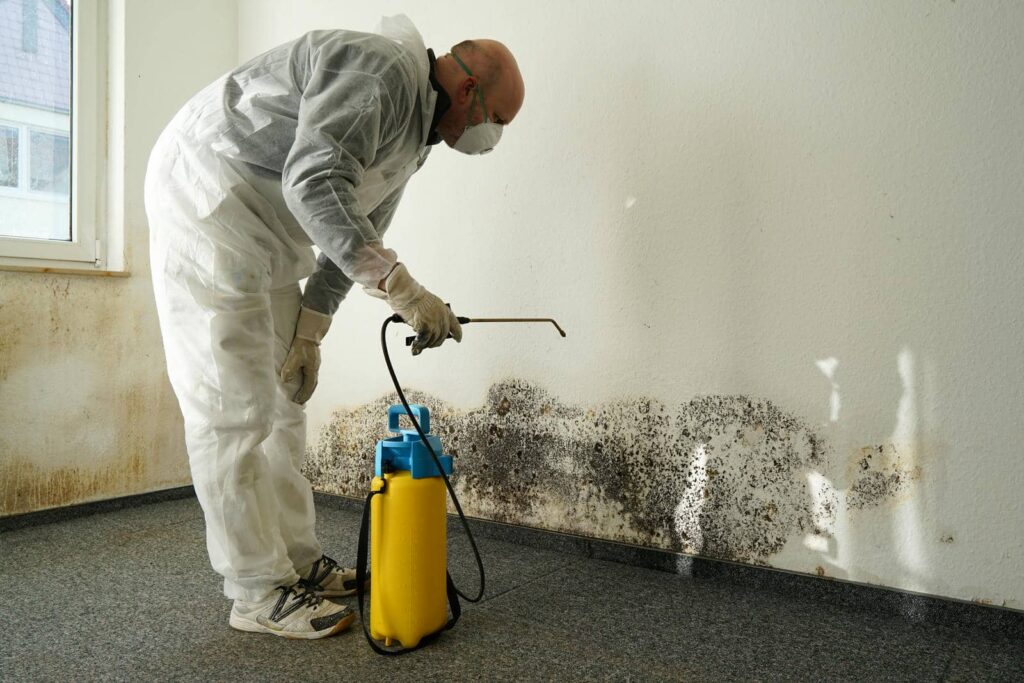
Before starting mold remediation, you need to prioritize your safety by using appropriate personal protective equipment (PPE), such as gloves, masks, and goggles.
Ensure proper ventilation and airflow in the area to minimize exposure to mold spores.
Taking these precautions will help protect your health and facilitate a more effective remediation process.
Personal Protective Equipment
When tackling mold remediation after water damage, using the right personal protective equipment (PPE) is essential to ensure your safety.
Start by wearing a high-quality respirator to protect against inhaling mold spores. Additionally, wear protective goggles to shield your eyes from irritants.
It’s also critical to wear gloves and long sleeves to prevent skin contact with mold. For added protection, consider donning disposable coveralls, especially in heavily contaminated areas.
These protective gear types are key components of effective mold prevention strategies, helping you minimize exposure during the remediation process.
Always verify your PPE is properly fitted and maintained to maximize its effectiveness and keep you safe while you work on eliminating mold hazards.
Ventilation and Airflow
Ensuring proper ventilation and airflow is crucial for mitigating mold risks during the remediation process. You should implement effective air circulation techniques to minimize moisture and promote drying.
Start by opening windows and doors to create a cross-breeze, enhancing natural airflow. If possible, use fans to increase circulation and direct moist air outside.
Consider utilizing ventilation systems, such as dehumidifiers or air movers, to further reduce humidity levels. These devices can help maintain ideal conditions and prevent mold spores from settling.
Before you begin, verify that all ventilation systems are functioning correctly and that air filters are clean. By prioritizing airflow, you greatly reduce the chances of mold regrowth, safeguarding both your health and the integrity of your space.
Gathering Necessary Tools and Materials
To effectively remediate mold after water damage, you’ll need a specific set of tools and materials.
Gathering the right equipment ensures a thorough and efficient process. Here’s what you should have on hand:
Mold Testing Kits: These help you identify the type and extent of mold present, guiding your remediation strategy.
Moisture Meters: Use these to assess moisture levels in walls and materials, ensuring the area is dry enough to prevent future growth.
Protective Gear: Equip yourself with gloves, masks, and goggles to safeguard against mold spores while working.
Cleaning Solutions: Get a suitable mold remediation cleaner or a mixture of water and detergent for effective surface cleaning.
Having these tools ready allows you to tackle mold efficiently and safely, setting the stage for successful remediation.
Removing Affected Materials
Once you’ve gathered your tools, it’s crucial to remove all affected materials to prevent mold from spreading.
Start by identifying the items that are contaminated, such as drywall, insulation, or carpeting. Use appropriate removal techniques, like cutting away the affected sections with a utility knife or carefully pulling up carpet. Make sure you wear personal protective equipment (PPE) during this process to avoid exposure.
After removal, focus on proper disposal methods. Place the contaminated materials in heavy-duty plastic bags to contain spores and prevent cross-contamination. Seal the bags tightly before discarding them in accordance with local regulations.
For large items, consider using a dumpster or special disposal service. Throughout this process, keep the work area contained to prevent mold from spreading to unaffected areas.
Following these steps diligently will help ensure a safer and more effective remediation.
Cleaning and Disinfecting Surfaces
To effectively clean and disinfect surfaces after water damage, you’ll need essential cleaning supplies such as gloves, masks, and suitable cleaning agents.
Understanding effective disinfection techniques is critical for eliminating mold spores and preventing future growth.
Essential Cleaning Supplies
When tackling mold remediation after water damage, having the right cleaning supplies is essential for effectively disinfecting surfaces.
The following list outlines the essential tools and mold cleaning solutions you’ll need:
Mold Cleaning Solutions: Use a commercial mold removal product or a homemade mixture of vinegar and water.
Protective Gear: Wear gloves, goggles, and a mask to safeguard against mold spores.
Scrub Brushes: Utilize various sizes for different surface types, ensuring thorough cleaning.
Spray Bottles: Ideal for applying your mold cleaning solutions evenly on affected areas.
With these supplies on hand, you can confidently begin the remediation process, ensuring surfaces are properly cleaned and disinfected.
Effective Disinfection Techniques
Effective disinfection techniques are essential for eliminating mold and preventing its return after water damage. Start by selecting appropriate disinfection methods, such as bleach solutions or commercial mold removers, which effectively kill mold spores on surfaces.
Make certain you wear protective gear while applying these solutions. For surface sanitization, focus on high-touch areas like doorknobs, light switches, and countertops. Scrub surfaces thoroughly, allowing the disinfectant to sit for the recommended contact time to maximize effectiveness.
Afterward, rinse the surfaces with clean water to remove any residue. Don’t forget to dry the area completely, as moisture can promote mold regrowth.
Regularly inspect your cleaned areas to make certain that mold doesn’t return, maintaining a safe and healthy environment.
Drying and Dehumidifying the Area
As soon as you’ve addressed any immediate water sources, drying and dehumidifying the area becomes crucial to prevent mold growth.
You need to create an environment that’s inhospitable to mold by effectively managing moisture levels. Here’s how you can do it:
Use Dehumidifiers: Strategically place dehumidifiers in affected areas to reduce humidity levels.
Ventilate the Space: Open windows and doors to promote air circulation, enhancing the drying process.
Monitor Moisture Levels: Utilize moisture monitoring tools to keep track of humidity. Aim for levels below 60%.
Inspect and Maintain: Regularly check surfaces for dampness and verify your dehumidifiers are functioning correctly.
Applying Mold Inhibitors
Applying mold inhibitors is a vital step in preventing mold growth after water damage. These substances help create an environment that’s hostile to mold spores, supporting your mold prevention strategies. You can choose from various options, including eco-friendly inhibitors that are safe for your home and environment.
| Type of Inhibitor | Benefits | Considerations |
|---|---|---|
| Chemical | Fast-acting, effective | May have strong odors |
| Eco-friendly | Non-toxic, safe for pets | May require more applications |
| Natural | Readily available, safe | May take longer to work |
When applying mold inhibitors, make certain the affected areas are clean and dry. Follow the manufacturer’s instructions for application, and be consistent with your treatments to effectively combat mold resurgence. This proactive approach plays a vital role in maintaining a mold-free environment.
Monitoring for Future Mold Growth
To prevent future mold growth, you need to establish a regular inspection schedule for areas prone to moisture.
Additionally, implementing humidity control measures will help maintain an environment that discourages mold development.
Regular Inspections Schedule
Establishing a regular inspection schedule is essential for monitoring potential mold growth after water damage. Consistent inspections help you catch issues early, reducing both health risks and remediation costs.
Here are some inspection checklist essentials to take into account:
Inspect high-risk areas: Check basements, bathrooms, and kitchens regularly.
Assess humidity levels: Use a hygrometer to ensure moisture levels remain low.
Look for water stains: Examine ceilings, walls, and floors for signs of past leaks.
Evaluate ventilation: Confirm proper airflow in all areas to minimize moisture accumulation.
Humidity Control Measures
While monitoring for future mold growth, implementing effective humidity control measures is crucial for maintaining a safe environment.
Start by using humidity control methods, such as dehumidifiers, to keep indoor humidity levels below 60%. Regularly check and adjust your HVAC systems to ensure proper air circulation and moisture reduction techniques.
Seal any leaks in roofs, walls, and plumbing to prevent moisture accumulation. Additionally, consider using moisture-absorbing materials like silica gel in high-risk areas, such as basements.
Installing exhaust fans in kitchens and bathrooms will help expel excess humidity.
Finally, monitor humidity levels with a hygrometer, allowing you to take immediate action if levels rise, thereby preventing future mold growth effectively.
Preventive Measures to Avoid Future Water Damage
Since water damage can lead to significant mold growth, implementing preventive measures is vital for safeguarding your property.
Here are four effective strategies to help you avoid future water damage:
Install Waterproofing Solutions: Verify your foundation and basement are properly sealed to prevent water infiltration during heavy rains.
Conduct Routine Maintenance: Regularly inspect your roof, gutters, and downspouts for blockages or damage that could cause leaks.
Monitor Indoor Humidity: Use dehumidifiers to maintain indoor humidity levels between 30-60%, reducing the likelihood of mold growth.
Inspect Plumbing: Check for leaks in pipes, faucets, and appliances. Address any issues immediately to prevent water accumulation.
When to Call Professional Mold Remediation Services
Even with preventive measures in place, water damage can still occur, leading to potential mold issues that require immediate attention. You should call professional mold remediation services if you notice extensive mold growth, persistent dampness, or health symptoms affecting you or your family.
Here’s a quick guide to help you decide:
| Situation | Action |
|---|---|
| Visible mold covering large areas | Call professionals immediately |
| Uncertain about mold type | Get a professional assessment |
| Persistent odors or health issues | Seek expert help right away |
A professional assessment benefits you by ensuring adherence to mold inspection criteria and providing thorough remediation. They utilize advanced techniques and equipment, ensuring safe and effective mold removal that you may not achieve on your own. Don’t hesitate; timely intervention can prevent further damage.
Summary
Successfully remediating mold after water damage requires diligence and the right approach. Isn’t it worth the effort to ensure a safe, healthy environment for you and your family? By following the steps outlined, from evaluating mold growth to implementing preventive measures, you can effectively tackle mold issues and reduce the chances of future infestations. Remember, if the problem seems overwhelming, don’t hesitate to call in professional help for a thorough solution.
Recent Posts
How to Extract Flood Water Fast
When you need to Extract Flood Water Fast, you need to act quickly, but not
5 Best Odor Removal After Flood Damage
If you’re dealing with flood odor, Odor Removal starts with tracing the source rather than
Smoke Odor Removal After Flood Damage
After a flood, smoke odor can actually get stronger because water drives soot deeper into