
Contents
Detecting hidden water damage in walls is essential for preserving your home’s integrity. Not addressing issues like moisture can lead to structural problems and health risks from mold. You might notice subtle signs, but without the right tools, you could miss critical underlying issues. Understanding how to identify these problems early can save you time and money. So, what should you look for, and how can you effectively assess your home’s condition?
Key Takeaways
- Early detection of hidden water damage prevents costly repairs and maintains the structural integrity of your home.
- Identifying moisture intrusion reduces the risk of mold growth and associated health hazards.
- Recognizing signs of water damage, such as discoloration and peeling paint, helps address issues before they escalate.
- Utilizing tools like moisture meters and infrared cameras enhances inspection accuracy and efficiency.
- Regular inspections and maintenance can save money by preventing extensive damage from unnoticed leaks.
Understanding the Importance of Early Detection
When you detect water damage early, you can greatly reduce the potential for costly repairs and health risks associated with mold growth.
Early warning signs, such as discoloration or dampness in walls, often indicate underlying issues. By promptly addressing these signs, you preserve your home’s integrity and achieve significant cost savings.
Understanding the importance of early detection empowers you to take action before minor problems escalate.
Regular inspections and utilizing moisture meters can help identify hidden leaks, allowing for timely repairs.
Common Causes of Hidden Water Damage
Hidden water damage often results from various sources, many of which can go unnoticed until significant issues arise. Understanding these causes is essential for prevention and ensuring your home remains safe.
| Common Causes | Description | Impact on Walls |
|---|---|---|
| Pipe Leaks | Small leaks in plumbing systems | Gradual weakening of structure |
| Roof Issues | Damaged shingles or flashing | Water intrusion and mold |
| Plumbing Failures | Faulty fixtures or connections | Water saturation in walls |
| Appliance Malfunctions | Broken dishwashers or washing machines | Flood damage risk |
| Humidity Levels | High indoor moisture | Condensation problems |
Drainage issues can also contribute to hidden water damage. If you don’t address these factors promptly, you risk extensive damage that could compromise your home’s integrity. By identifying these common causes, you’ll be better equipped to protect your living space.
Signs and Symptoms of Water Damage in Walls
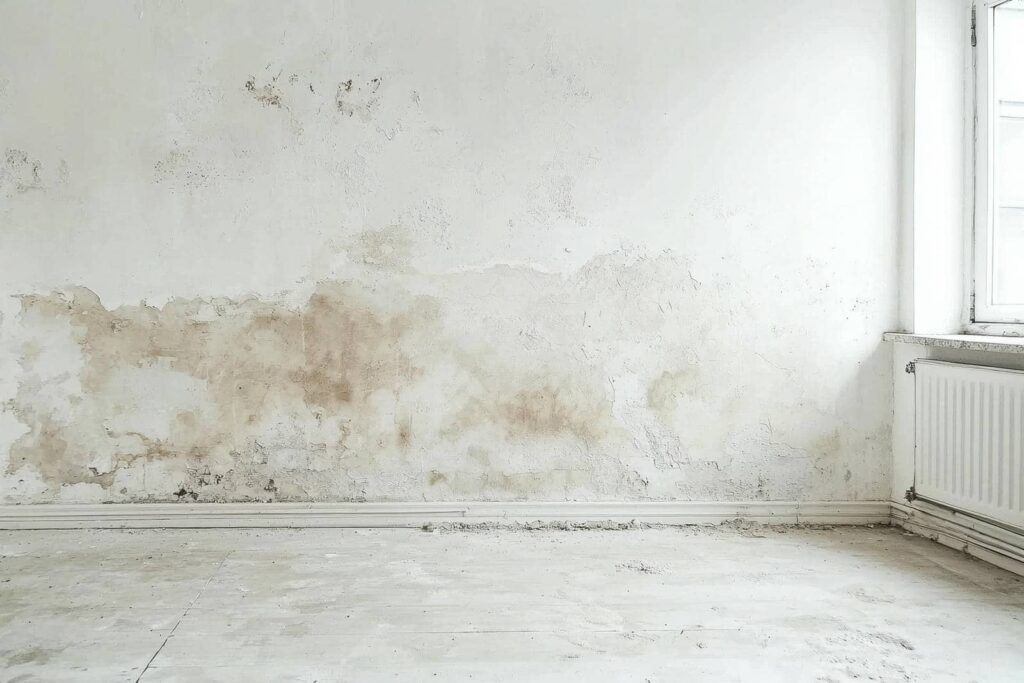
When evaluating your walls for water damage, look for visible stains and discoloration, which often indicate moisture intrusion.
You’ll also want to check for mold and mildew growth, as these can thrive in damp environments.
Additionally, warped or bubbling paint can signal underlying issues that require immediate attention.
Visible Stains and Discoloration
Visible stains and discoloration on walls often serve as the initial indicators of water damage within a structure. By analyzing stain patterns, you can pinpoint potential sources of moisture intrusion.
Common discoloration includes yellowing, browning, or dark spots, indicating prolonged exposure to water. Conducting a thorough discoloration analysis helps identify the extent of damage and the likelihood of underlying issues.
Pay special attention to areas near plumbing fixtures, windows, or roofs, where leaks are more common. Recognizing these signs early can prevent further deterioration, creating a safer and healthier living environment.
If you notice any suspicious stains, don’t hesitate to investigate further—it’s essential for maintaining the integrity of your home.
Mold and Mildew Growth
After identifying visible stains and discoloration, your next step should be to examine the presence of mold and mildew growth in the walls.
Look for fuzzy patches, black spots, or a musty odor, as these are key indicators. Mold thrives in damp environments, so check areas near leaks or high humidity.
If you spot mold, immediate mildew treatment is vital to prevent further spread. Utilize appropriate cleaning solutions and ensure proper ventilation to facilitate mold prevention.
Remember, even hidden water damage can lead to significant health issues, so act swiftly. Regular inspections and moisture control are essential in maintaining a safe, healthy living space.
Warped or Bubbling Paint
If you notice warped or bubbling paint on your walls, it’s a strong indication of underlying water damage.
This paint deterioration often occurs when moisture seeps into the wall structure, compromising its integrity. As water infiltrates, it disrupts the bond between the paint and the surface, leading to unsightly bubbles or warping.
You may also find that the paint starts to peel away, revealing more severe issues hidden beneath the surface.
Addressing these symptoms promptly is vital for aesthetic reasons and for maintaining the overall wall integrity.
Neglecting this warning sign can lead to more extensive damage, making early detection essential for preserving your home’s value and safety.
Tools and Techniques for Inspection
When inspecting for hidden water damage in walls, several essential tools and techniques can greatly enhance your assessment process.
Employing effective inspection tools and detection techniques helps ensure you don’t overlook potential issues. Here are four key tools and techniques to evaluate:
Moisture Meters: These devices measure moisture content in materials, providing immediate readings that can indicate hidden damage.
Infrared Cameras: They detect temperature variations in walls, revealing potential moisture pockets behind the surface.
Borescopes: These allow you to look inside walls without causing damage, helping to identify hidden problems.
Sound Detection: Tapping the wall can help you identify hollow sounds, suggesting possible water damage behind the surface.
Using these tools and techniques, you can conduct thorough inspections, ensuring the integrity of your walls and promoting a safe living environment.
Moisture Meters: How They Work
Moisture meters are essential tools for identifying hidden water damage within walls, and understanding their types is vital for effective detection.
You’ll find that these devices utilize various measurement techniques, such as capacitance or resistance, to assess moisture levels accurately.
Knowing how each type functions can greatly enhance your ability to pinpoint problem areas in your home.
Types of Moisture Meters
While various types of moisture meters exist, each serves a specific purpose in detecting hidden water damage within walls. Understanding these can help you choose the right tool for pinpoint accuracy in moisture detection.
Digital Meters: These offer precise readings and often include built-in calibration techniques for enhanced accuracy.
Analog Meters: Simpler and more affordable, they rely on a dial to indicate moisture levels, though less precise than digital models.
Pin-Type Meters: These use probes to penetrate material, providing localized moisture readings.
Non-Invasive Meters: They measure moisture levels without damaging surfaces, making them ideal for delicate applications.
Following user guidelines ensures you maximize the effectiveness of whichever meter you choose.
Measurement Techniques Explained
Understanding how moisture meters operate can greatly enhance your ability to detect hidden water damage.
These devices utilize non-invasive methods to measure moisture levels within walls, effectively evaluating the risk of damage without causing disruption. By sending electrical signals, moisture meters can determine moisture content and assist in moisture mapping, which identifies areas of concern within the structure.
You can pinpoint high-risk zones by taking readings at various locations, allowing for targeted interventions. Familiarizing yourself with these techniques improves your detection skills and fosters a sense of community among those who prioritize effective home maintenance.
Investing in knowledge about moisture meters empowers you to safeguard your home against the costly consequences of unnoticed water damage.
Infrared Thermography for Water Detection
Infrared thermography is an invaluable tool for detecting hidden water damage in walls, as it allows you to visualize temperature variations that indicate moisture presence.
By using infrared technology and thermal imaging, you can identify issues that mightn’t be visible to the naked eye.
Here are some key benefits of employing infrared thermography:
- Non-invasive: It allows you to assess walls without tearing them apart.
- Immediate results: You’ll receive instant visual feedback on moisture levels.
- Comprehensive analysis: It can cover large areas quickly, identifying hotspots and cold spots.
- Preventive action: Early detection helps you mitigate further damage and costly repairs.
Utilizing infrared thermography ensures you have a precise method for locating hidden water damage, fostering a proactive approach to maintaining your property’s integrity.
Visual Inspection Techniques
When evaluating potential water damage in walls, employing visual inspection techniques is essential, as it enables you to identify obvious signs of moisture intrusion.
Start your inspection checklist by examining wall surfaces for discoloration, stains, or peeling paint, which often indicate water presence. Pay attention to areas around windows, doors, and plumbing fixtures, as these are common entry points for moisture.
Look for warping or buckling in the drywall, as this can signal hidden water damage beneath the surface.
Don’t forget to inspect the baseboards and flooring; any swelling or mold growth can be a red flag.
Using natural light or a flashlight can help reveal subtle changes in texture or color.
By systematically following your inspection checklist, you can effectively pinpoint areas that may require further assessment, ensuring no hidden water damage goes unnoticed.
Your diligence in this process fosters a safer, healthier living environment.
Professional Assessment vs. DIY Methods
After completing a thorough visual inspection, you might wonder whether to handle potential water damage yourself or seek professional help.
Weighing your options is vital, as both routes come with their own sets of advantages and disadvantages. Here’s a quick cost comparison and analysis:
Professional Expertise: Experts use advanced tools and techniques to detect hidden water damage that you might overlook.
Time Efficiency: Professionals can often complete assessments faster, saving you valuable time.
DIY Knowledge: If you possess adequate skills and knowledge, you might save money by addressing minor issues yourself.
Long-term Consequences: Improper DIY methods could lead to more severe damage and higher costs down the line.
Ultimately, consider your comfort level and the complexity of the situation.
If you’re unsure, investing in professional expertise may be the safest route to ensure thorough detection and resolution of hidden water damage.
Preventative Measures to Avoid Future Damage
To prevent future water damage, it’s vital to implement proactive measures that safeguard your home from moisture intrusion.
Start by conducting regular inspections of areas prone to leaks, such as bathrooms, kitchens, and basements. Check for signs of water stains, mold, or dampness, as these can indicate hidden issues.
Incorporating preventative maintenance into your routine is important. Make sure that gutters and downspouts are clean and functioning properly to direct water away from your foundation.
Seal any cracks in walls and foundations to prevent moisture entry.
Address plumbing issues immediately; even small leaks can escalate into significant damage.
Consider investing in moisture barriers and dehumidifiers for high-humidity areas.
Frequently Asked Questions
How Can I Tell if My Home Has Hidden Water Damage?
To tell if your home has hidden water damage, look for visual signs like discoloration or peeling paint. Use moisture detection tools to measure dampness in walls, ensuring you identify potential issues before they worsen.
What Are the Long-Term Effects of Undetected Water Damage?
Undetected water damage can severely compromise your home’s structural integrity, leading to costly repairs. Additionally, it fosters mold growth, which poses health risks. Regular inspections can help you mitigate these long-term effects and protect your investment.
Can Hidden Water Damage Affect My Health?
Yes, hidden water damage can considerably affect your health. It promotes mold growth, which can lead to respiratory issues and allergic reactions. Addressing these problems early can protect both your well-being and your living environment.
How Often Should I Inspect for Hidden Water Damage?
You should conduct regular inspections for hidden water damage at least twice a year, ideally during seasonal checks. This proactive approach helps you identify potential issues early, ensuring your home remains safe and structurally sound.
Is Hidden Water Damage Covered by Homeowners Insurance?
Hidden water damage might be covered by your homeowners’ insurance, but it depends on your specific insurance policies and coverage limits. Always review your policy details to understand what’s included regarding hidden damages before an issue arises.
Recap
In the domain of home maintenance, “a stitch in time saves nine” rings especially true when addressing hidden water damage. By prioritizing early detection, you protect your home’s structural integrity and safeguard your health. Utilizing moisture meters and infrared cameras empowers you to identify issues before they escalate, ultimately saving you from costly repairs. Regular inspections and proactive measures can make all the difference in preserving your home’s value and ensuring a safe living environment.
Recent Posts
5 Tips for Mold Removal After Water Damage
When water damage occurs, addressing mold promptly is vital to safeguard your health and property.
Why Focus on Storm Damage Restoration Strategies?
When storms strike, the aftermath can be overwhelming, affecting both structures and the emotional well-being
10 Key Tips for Storm Damage Restoration
When nature has a way of rearranging your environment, it’s vital to respond with a