
Contents
Your crawl space can be a hidden jungle where mold thrives if not properly managed. To tackle this issue effectively, you need a systematic approach that addresses moisture control, ventilation, and cleaning techniques. Understanding the types of mold and the extent of the infestation is essential. What steps can you take to ensure your crawl space remains mold-free and healthy? Let’s explore the most effective strategies for remediation.
Key Takeaways
- Inspect the crawl space for moisture issues, including leaks and standing water, to identify the root cause of mold growth.
- Utilize EPA-approved cleaning agents and wear protective gear while cleaning mold-infested areas for safety and effectiveness.
- Ensure proper ventilation by installing vents or fans and monitoring humidity levels to maintain them below 60%.
- Implement moisture control measures, such as dehumidifiers and moisture barriers, to prevent future mold growth.
- Document all findings and remediation actions to create a comprehensive record for future reference and inspections.
Assessing the Crawl Space Environment
Before you start any mold remediation efforts, it’s essential to assess the crawl space environment thoroughly.
Begin with a crawl space inspection, focusing on moisture levels, ventilation, and insulation. High humidity and poor air circulation are prime candidates for mold growth, so take note of any environmental factors contributing to these conditions.
Check for leaks, standing water, or condensation, as these can exacerbate moisture issues.
Evaluate insulation materials, ensuring they’re dry and intact, since damp insulation can harbor mold spores.
Also, consider the soil type and drainage around your home; improper drainage can lead to water accumulation in the crawl space.
Document your findings meticulously, as this information will guide your remediation strategy.
Identifying Mold Types and Extent of Infestation
As you begin the mold remediation process, identifying the types of mold present and the extent of infestation is crucial for effective treatment.
Start by utilizing mold identification methods such as visual inspection, air sampling, and surface testing. Each method can reveal different mold species, helping you understand potential health risks associated with each type.
Next, conduct an infestation severity assessment. This involves evaluating the size of the affected area and the concentration of mold spores.
Take note of any visible mold growth, discoloration, or odor, as these often indicate a serious problem.
Document your findings thoroughly, as this information will guide your remediation efforts.
Understanding the specific mold types and the severity of the infestation empowers you to select appropriate cleaning agents and techniques.
Ensuring Proper Ventilation
How can you ensure proper ventilation in your crawl space to prevent mold growth? Securing effective airflow dynamics is vital for maintaining a dry environment.
Here are three essential steps to achieving proper ventilation:
Install Ventilation Systems: Choose appropriate vents or fans to promote consistent airflow. Consider powered systems for increased efficiency.
Assess Airflow Pathways: Make sure there are no obstructions blocking the vents. Clear debris and confirm that air can circulate freely throughout the space.
Monitor Humidity Levels: Regularly check humidity to make certain it stays within ideal ranges. High humidity can negate your ventilation efforts.
Controlling Moisture Levels
Ensuring proper ventilation sets the stage for controlling moisture levels in your crawl space, a vital factor in preventing mold growth.
Start by implementing humidity control measures, such as using dehumidifiers to maintain ideal indoor humidity levels. Ideally, you want to keep humidity below 60%.
Next, install moisture barriers on the ground and walls of your crawl space. These barriers, typically made of plastic sheeting, block water vapor from the soil, greatly reducing moisture levels.
Confirm these barriers are well-sealed and overlap to prevent gaps.
Regular inspections are essential; check for any signs of water intrusion or damage.
Address leaks promptly, and consider landscaping adjustments to direct water away from your foundation.
Implementing Effective Cleaning Techniques
To effectively eliminate mold from your crawl space, you must employ thorough cleaning techniques that target existing spores and prevent future growth. Here are three essential steps to follow:
Choose the Right Cleaning Agents: Use EPA-approved cleaning agents specifically designed for mold removal. Bleach can be effective, but it often doesn’t penetrate porous surfaces; consider mold-specific products instead.
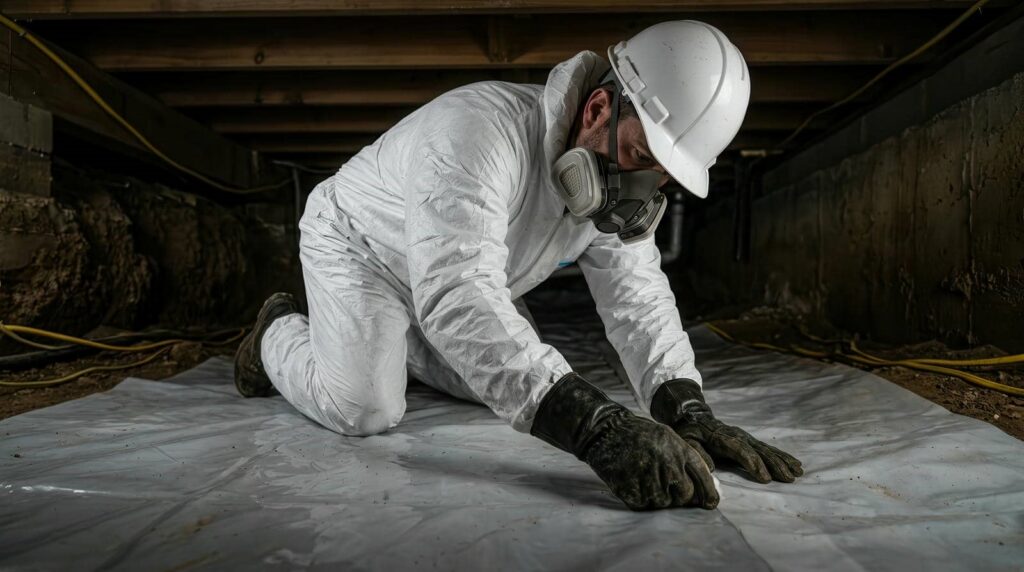
Wear Safety Precautions: Always wear protective gear, including gloves, goggles, and a mask, to safeguard yourself from harmful spores and chemicals. Ensuring proper ventilation in the crawl space is also vital.
Scrub and Disinfect: Use brushes and sponges to scrub affected areas thoroughly.
Afterward, apply your cleaning agent and allow it to sit for the recommended time to maximize effectiveness.
Using Mold-Resistant Materials
While you can effectively clean mold from your crawl space, using mold-resistant materials during construction or renovation can greatly reduce the likelihood of future infestations.
One of the most effective strategies is to apply mold-resistant paints on walls and surfaces. These specially formulated paints inhibit mold growth, providing an extra layer of protection.
Additionally, installing moisture barriers is essential. These barriers prevent water vapor from seeping into your crawl space, considerably reducing humidity levels and creating an environment less conducive to mold development.
When selecting moisture barriers, look for high-quality materials designed for durability and effectiveness.
Conducting Regular Inspections and Maintenance
Regular inspections and maintenance are essential for preventing mold growth in your crawl space, as they allow you to catch potential issues before they escalate.
Establishing a routine helps you identify moisture problems, ensuring your home remains safe and healthy.
Here are three key practices to include in your maintenance schedules:
Conduct Crawl Space Inspections: Check for signs of moisture, leaks, or standing water. Inspect insulation, ductwork, and vents to ensure everything is in good condition.
Monitor Humidity Levels: Use a hygrometer to measure humidity. Aim for levels below 60% to deter mold growth.
Clean and Clear: Remove debris, leaves, and organic materials that can retain moisture. Regularly clear your crawl space to promote airflow.
Wrap-Up
Tackling crawl space mold requires diligence and the right approach. By evaluating your environment, ensuring proper ventilation, and controlling moisture, you can create a healthier space. Remember, it’s not just about scrubbing away the mold—think of it like fighting a dragon with a sword; you need the right tools and strategy. Regular inspections and maintenance will keep your crawl space mold-free and safeguard your home for years to come. Stay proactive and protect your investment!
Recent Posts
What Repairs Stop Mold After Water Damage
To Stop Mold After Water Damage, you need to fix the moisture source first, then
Why Does Leak Water Damage Cause Mold?
Like a slow leak in a ship’s hull, water damage in your home keeps feeding
Ceiling Leak Water Damage Mold Repair Guide
You notice a ceiling stain the same day a drip starts, and that coincidence matters