
Contents
Think of your crawl space as the foundation of a house of cards; one weak card can cause the entire structure to collapse. You need to assess the condition carefully to identify moisture, mold, and pest issues before they escalate. By taking systematic steps, you can restore and maintain a healthy environment down there. So, how do you begin this essential crawl space cleanup process? Let’s explore the best practices to ensure your crawl space remains safe and functional.
Key Takeaways
- Conduct a thorough inspection to identify moisture, mold, pests, and structural integrity issues in the crawl space.
- Remove all debris and contaminants, categorizing materials for proper disposal and cleaning strategies.
- Address moisture problems by installing barriers, using dehumidifiers, and ensuring proper ventilation.
- Clean and disinfect surfaces using effective agents, ensuring proper airflow for drying.
- Maintain drainage systems and check for blockages to prevent water pooling and foundation issues.
Assessing the Crawl Space Condition
Before you begin the cleanup process, it’s essential to thoroughly assess the condition of your crawl space.
Start with crawl space inspections to identify any signs of moisture, mold, or pests. Use a flashlight to examine every corner, checking for water damage and insulation integrity. Take note of any unusual odors, as they can indicate hidden issues.
Next, conduct structural assessments to evaluate the foundation and support beams. Look for cracks, sagging, or signs of rot. These structural concerns can compromise your home’s safety and require immediate attention.
Document your findings to establish a clear picture of the current state. This step helps you address immediate issues and fosters a sense of belonging in your home, knowing you’re taking proactive measures.
Ensuring Safety Precautions
While you prepare to tackle your crawl space cleanup, it’s important to prioritize safety precautions to protect yourself from potential hazards. Start by wearing appropriate safety gear, including gloves, goggles, and a respirator, to guard against harmful contaminants and debris.
Make sure your clothing is durable and offers full coverage to prevent skin exposure.
Before you begin, create an emergency plan. Inform someone outside your home of your activities and expected duration. Keep a charged mobile phone handy in case you need assistance. Familiarize yourself with the crawl space layout and identify exits.
Additionally, check for any signs of mold or pests, as these can pose health risks. Consider using a flashlight or headlamp to improve visibility, reducing the chance of accidents.
Removing Debris and Contaminants
When removing debris and contaminants from your crawl space, start by evaluating the types of materials present, such as organic waste or hazardous substances.
Understanding what you’re dealing with will help you choose the appropriate disposal methods that comply with local regulations.
Properly disposing of these materials ensures a clean and safe environment beneath your home.
Assessing Debris Types
As you begin the crawl space cleanup process, it’s essential to evaluate the types of debris and contaminants present.
Start with debris identification, which involves examining the materials strewn about. Common contaminants may include mold, rodent droppings, or construction debris.
Next, focus on material categorization; separate organic materials from inorganic ones. This step helps in understanding the nature of the debris and aids in determining the level of hazard it poses to your home.
Document your findings, as this will guide your cleanup strategy moving forward.
Safe Disposal Methods
To ensure a safe and effective cleanup, it’s crucial to follow proper disposal methods for the debris and contaminants you’ve identified in your crawl space.
Begin by segregating recyclable materials, like metal and certain plastics, and take them to a local recycling center. For hazardous waste, such as chemicals or moldy insulation, contact your local waste management facility for specific guidelines and drop-off locations.
Never mix hazardous waste with regular trash, as this can pose serious health risks. Be certain that you wear protective gear while handling these materials to safeguard your health.
Addressing Moisture Issues
Since moisture can lead to serious structural damage and mold growth, addressing it effectively in your crawl space is vital.
You need to take specific steps to manage moisture and ensure a healthy environment. Here are some key actions to reflect on:
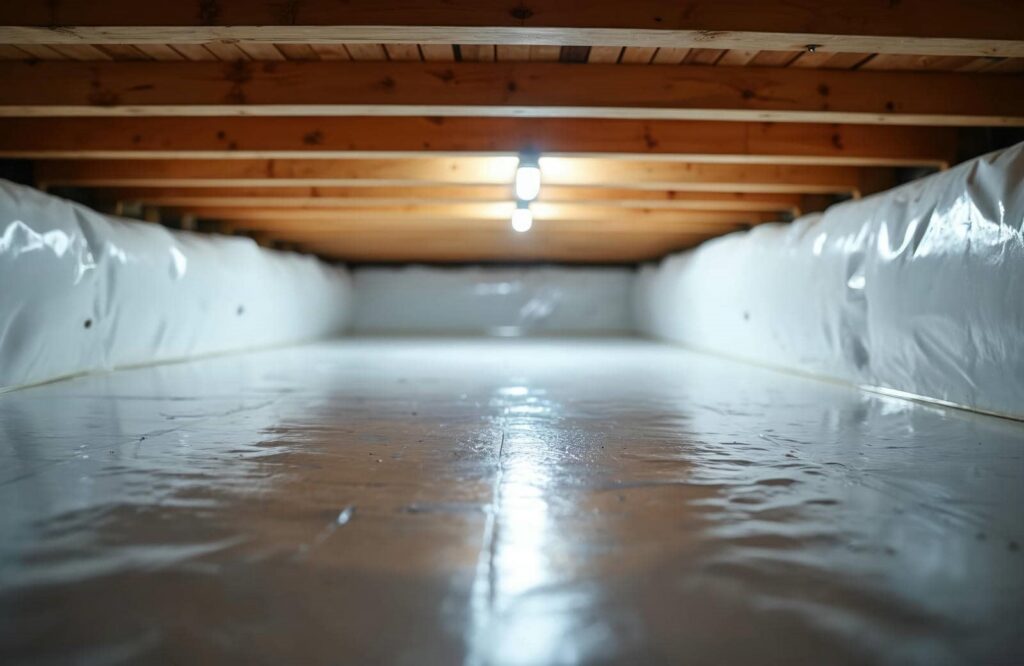
Install moisture barriers: Use plastic sheeting to cover the ground and walls, preventing ground moisture from entering.
Enhance humidity control: Use dehumidifiers to maintain ideal humidity levels, ideally between 30% and 60%.
Ensure proper ventilation: Install vents or exhaust fans to allow airflow and reduce stagnant moisture.
Inspect plumbing: Regularly check for leaks or condensation around pipes, which can introduce excess moisture.
Cleaning and Disinfecting Surfaces
To effectively clean and disinfect surfaces in your crawl space, you need to choose the right cleaning agents that target mold and bacteria.
Utilize proper disinfection techniques to ensure all surfaces are thoroughly sanitized, reducing the risk of future contamination.
This process is essential for maintaining a safe and healthy environment beneath your home.
Choose Effective Cleaning Agents
Choosing effective cleaning agents is essential for maintaining a clean and safe crawl space.
You’ll want to select products that clean and help prevent mold and mildew. Consider using a mix of natural cleaners and chemical agents tailored for your specific needs.
Here’s a quick list to guide you:
- Vinegar and water: A natural disinfectant that cuts through grime.
- Baking soda: Great for absorbing odors and moisture.
- Bleach solutions: Effective for heavy-duty disinfection when used carefully.
- Commercial mold removers: Purpose-built chemical agents designed for tough mold challenges.
Proper Disinfection Techniques
When tackling the disinfection of surfaces in your crawl space, it’s crucial to follow a systematic approach to ensure thoroughness and effectiveness.
Start by selecting appropriate disinfection methods, like using a mixture of water and bleach or commercially available disinfectants. Make sure you’re wearing protective gear to maintain safety.
Next, adhere to sanitization protocols by cleaning surfaces first to remove dirt and debris, which can hinder disinfection.
Apply your chosen disinfectant evenly across all surfaces, allowing it to sit for the recommended time to confirm pathogens are eradicated.
Finally, rinse surfaces if necessary and make certain proper ventilation to dry the area completely.
Following these steps will help you achieve a clean and safe crawl space, fostering a healthier environment for your home.
Inspecting for Structural Damage
A thorough inspection for structural damage in your crawl space is essential for maintaining the integrity of your home.
Conducting a damage assessment helps you identify potential issues before they escalate. Here’s what to look for during your inspection:
Wood rot: Check wooden beams and joists for signs of decay.
Pest infestations: Look for any signs of termites or rodents that could compromise structural stability.
Cracks in the foundation: Small cracks can indicate bigger problems, so monitor their growth.
Moisture levels: Excess humidity can weaken structures over time, so assess any damp areas.
Implementing Preventative Measures
To maintain the structural integrity of your crawl space, implementing preventative measures is vital. Start by adopting effective preventative strategies such as installing a vapor barrier. This barrier minimizes moisture accumulation, which can lead to mold and wood rot.
It’s also important to ensure proper drainage around your home; gutters should direct water away from the foundation.
Incorporate routine inspections into your schedule to catch potential issues early. Check for signs of pests, water leaks, or damage to insulation.
Consider investing in a dehumidifier to control humidity levels, which can further protect your crawl space from moisture-related problems.
Regularly cleaning debris and maintaining ventilation will also enhance air quality and inhibit mold growth.
Regular Maintenance and Monitoring
Regular maintenance and monitoring are key to ensuring your crawl space remains in ideal condition.
By performing routine inspections and moisture monitoring, you can prevent potential issues before they escalate.
Here are some essential steps to follow:
- Schedule regular inspections every six months to check for signs of mold or pests.
- Use a hygrometer to monitor humidity levels, aiming to keep them below 60%.
- Ensure proper ventilation to promote airflow, reducing moisture buildup.
- Maintain a clear drainage system to prevent water accumulation.
Final Thoughts
In the domain beneath your home, a clean crawl space symbolizes stability and health. By following these steps, you’re not just clearing out debris; you’re fortifying your foundation against moisture, mold, and pests. Each action taken is a brick in the wall of protection you’re building. Remember, regular maintenance is your shield, ensuring that this hidden space remains a fortress, safeguarding your home for years. Keep it clean, keep it dry, and your home will thrive.
Recent Posts
5 Steps for Flood Water Recovery
When floodwater enters your space, you need to act in a strict sequence. Flood Water
How to Restore Water Damage After Flood
After a flood, you’re facing more than a little cleanup, and your first move is
7 Smoke Odor Removal Tips After Water Damage
Smoke odor after water damage can linger in places you’d never think to inspect first.