
Contents
Controlling moisture in your crawl space is essential for maintaining a healthy home environment. Without proper management, excess humidity can lead to mold growth, structural damage, and even health issues. You need to understand various strategies, from ventilation techniques to effective drainage solutions. Each method plays an important role in moisture control. Let’s explore these tips to ensure your crawl space remains dry and safe.
Key Takeaways
- Ensure proper crawl space ventilation to prevent moisture buildup and improve indoor air quality.
- Install a durable vapor barrier to reduce humidity and prevent mold growth.
- Maintain effective drainage systems, directing water away from the foundation with gutters and grading.
- Seal cracks and openings in the foundation to block moisture intrusion effectively.
- Implement strategic landscaping with moisture-absorbing plants to enhance soil absorption around the home.
Understand the Importance of Crawl Space Ventilation
While many homeowners overlook their crawl spaces, understanding the importance of ventilation in this area is essential for maintaining a healthy home environment.
Proper ventilation systems ensure adequate air circulation, which helps prevent moisture buildup that can lead to mold growth and structural damage.
When you neglect this aspect, humid air becomes trapped, promoting unhealthy conditions that can affect your indoor air quality.
Install a Vapor Barrier
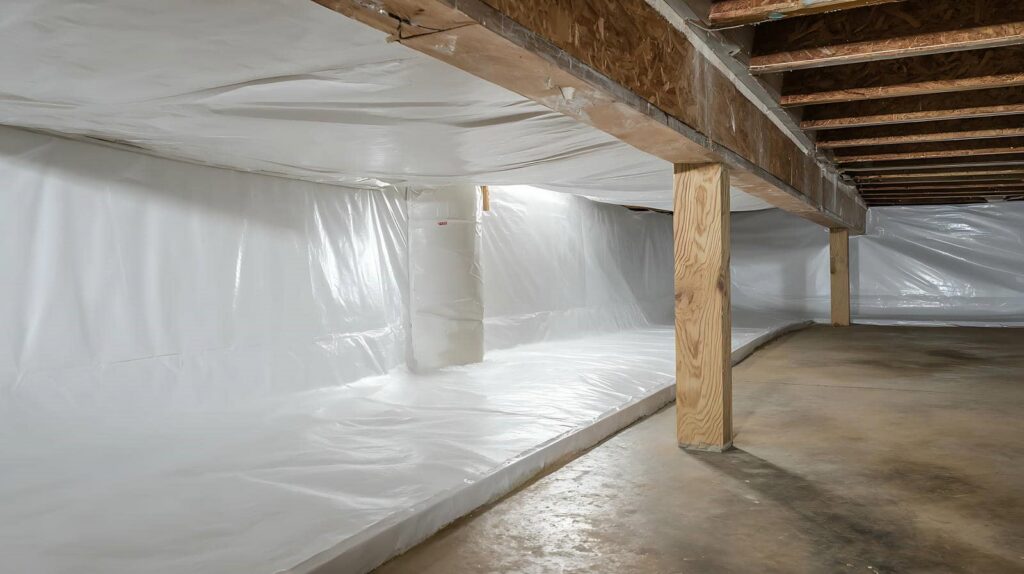
After ensuring proper ventilation in your crawl space, installing a vapor barrier is a critical next step in moisture control.
A well-placed vapor barrier can greatly reduce humidity levels and prevent mold growth. To get started, consider these key aspects:
Choose the Right Vapor Barrier Materials: Opt for polyethylene sheets of at least 6 mil thickness for durability and effectiveness.
Follow Proper Installation Techniques: Make sure the barrier covers the entire ground area and extends up the walls, sealing it to prevent moisture entry.
Seal All Joints and Edges: Use waterproof tape or adhesive to secure seams and edges, ensuring a tight seal against moisture.
Use Dehumidifiers Effectively
To effectively manage moisture in your crawl space, using dehumidifiers can be a game-changer.
First, consider dehumidifier placement; it’s essential to position the unit centrally to maximize air circulation. Make sure it’s not obstructed by furniture or debris, as this may hinder its efficiency.
Next, set the humidity settings to maintain ideal levels—ideally between 30% and 60%. Regularly monitor these settings, especially during humid months, to adjust as necessary.
You should also check the dehumidifier’s drainage system to prevent overflow. If your unit has a built-in pump, confirm it’s functioning correctly to facilitate continuous drainage.
Finally, clean the filter regularly to ensure the unit operates efficiently.
Ensure Proper Drainage Around Your Home
Proper drainage around your home is essential for preventing moisture accumulation in your crawl space.
Effective water management starts with ensuring that water flows away from your foundation. Here are some drainage solutions to take into account:
Gutters and Downspouts: Make sure they’re clean and direct water at least 5-10 feet away from your home.
Grading: Your yard should slope away from the foundation to facilitate water runoff.
French Drains: Installing these can help redirect water away from the crawl space, reducing moisture levels.
Seal Cracks and Openings
To effectively control moisture in your crawl space, you’ll want to identify vulnerable areas where water might enter.
Inspect for cracks and openings in the foundation, walls, and around vents.
Once you’ve pinpointed these spots, use appropriate sealants to block moisture intrusion and enhance your home’s protection.
Identify Vulnerable Areas
How can you effectively safeguard your crawl space from moisture intrusion? Identifying vulnerable areas is essential.
During your crawl space inspections, pay attention to cracks and openings where moisture sources can enter. Sealing these gaps can greatly reduce your risk of water damage.
- Inspect foundation walls for hairline cracks.
- Check around vents, pipes, and utility lines.
- Look for gaps in the sill plate or around windows.
Use Appropriate Sealants
Many homeowners overlook the importance of using appropriate sealants to protect their crawl spaces from moisture intrusion.
Selecting the right sealant types—like silicone, polyurethane, or acrylic—can make a significant difference in your moisture control strategy. Each type offers unique benefits, such as flexibility or durability, depending on your specific needs.
When applying sealants, proper application techniques are vital; verify surfaces are clean and dry, apply even pressure, and allow adequate curing time.
Regularly check for cracks and openings, as even the smallest gaps can invite moisture.
Maintain Gutters and Downspouts
While it might seem like a minor detail, maintaining your gutters and downspouts is essential for preventing moisture buildup in your crawl space.
Proper gutter maintenance ensures that water flows freely away from your foundation, reducing the risk of leaks and dampness. Pay attention to downspout positioning as well; directing water at least six feet away from your home can make a significant difference.
Here are some key tips to keep in mind:
- Clear debris: Regularly remove leaves, twigs, and dirt to prevent blockages.
- Check for leaks: Inspect gutters for any signs of damage or leaks that could lead to overflow.
- Adjust downspouts: Make sure they’re angled correctly to guide water away from the foundation.
Insulate Pipes to Prevent Condensation
To effectively control moisture in your crawl space, insulating pipes is vital, as uninsulated pipes can lead to condensation when warm, humid air meets the cold surface of the pipes.
By using pipe insulation, you can create a thermal barrier that helps maintain the temperature of the pipes, reducing the chances of condensation forming. This protects your pipes from freezing and minimizes moisture buildup in your crawl space, contributing to overall humidity control.
When selecting pipe insulation, consider materials like foam or fiberglass, as they offer excellent thermal resistance.
Be certain to cover all exposed pipes thoroughly, paying special attention to joints and connections where condensation is likely to occur. Proper installation is essential; ensure a tight fit to maximize condensation prevention.
Monitor Humidity Levels Regularly
To effectively manage moisture in your crawl space, it’s essential to use a hygrometer to monitor humidity levels.
This device provides accurate readings that help you understand when humidity is rising, allowing for timely interventions.
Additionally, tracking seasonal changes can help you anticipate fluctuations and adjust your moisture control strategies accordingly.
Use a Hygrometer
Monitoring humidity levels in your crawl space is essential for preventing moisture-related issues. By using a hygrometer, you can accurately gauge humidity measurements and take action when necessary. There are various hygrometer types available, so choose one that fits your needs.
Consider these factors when selecting a hygrometer:
- Accuracy: Look for a model known for precise readings.
- Ease of Use: Opt for a device with a clear display and simple controls.
- Data Logging: Some hygrometers track changes over time, providing valuable insights.
Regular checks with your hygrometer help you maintain ideal humidity levels, ensuring your crawl space remains dry and healthy.
This proactive approach protects your home and fosters a sense of community among homeowners who prioritize maintenance.
Track Seasonal Changes
Understanding how humidity levels fluctuate with the seasons can greatly enhance your crawl space moisture control efforts.
By tracking seasonal patterns, you can anticipate moisture fluctuations that typically occur in your area. For instance, spring and summer often bring higher humidity, which can lead to increased condensation and potential mold growth.
Regularly monitoring your crawl space’s humidity levels allows you to take proactive measures, such as using dehumidifiers or improving ventilation.
You’ll want to establish a routine to check these levels, particularly during changing months. This way, you’ll protect your home and foster a sense of belonging within your living environment, ensuring it’s safe and comfortable for you and your loved ones.
Consider Professional Inspection and Maintenance
While many homeowners may feel confident tackling moisture issues in their crawl spaces, enlisting a professional for inspection and maintenance can provide invaluable expertise and peace of mind.
Professionals can identify hidden problems you might overlook, ensuring your home remains safe and dry.
Here are three key benefits of hiring experts for crawl space inspection and maintenance services:
Thorough Assessment: Professionals use specialized tools to assess moisture levels and structural integrity, pinpointing issues before they escalate.
Customized Solutions: They can recommend tailored solutions based on your specific crawl space conditions, ensuring effective moisture control.
Ongoing Support: Regular maintenance services can help prevent future moisture issues, saving you time and money in the long run.
Investing in professional services protects your home and enhances its overall value.
You deserve a healthy living environment, and expert help can make all the difference.
Implement Landscaping Solutions for Moisture Control
To effectively control moisture in your crawl space, you should consider implementing strategic landscaping solutions.
Proper grading techniques can direct water away from your foundation, while effective drainage systems help manage excess rainwater.
Additionally, placing plants in strategic locations can enhance soil absorption, further reducing moisture levels around your home.
Proper Grading Techniques
Effective moisture control in crawl spaces begins with proper grading techniques, as the way your landscape is shaped can greatly influence water drainage.
By ensuring that your yard slopes away from the foundation, you can greatly reduce moisture accumulation.
Consider these key grading techniques:
Establish a slope: Aim for a 6-inch drop over the first 10 feet away from your home.
Use soil compaction: Compact the soil to minimize settling and maintain the slope.
Create drainage channels: Incorporate swales or trenches to direct water away from the foundation.
Implementing these strategies can help protect your crawl space from excess moisture, ensuring a healthier living environment for you and your family.
Effective Drainage Systems
Proper grading techniques alone can’t always address moisture issues in crawl spaces. To effectively manage water, you need to implement thorough drainage systems.
Start by installing gutters and downspouts that direct water away from your foundation. French drains can also be beneficial, as they collect and redirect excess water from the soil around your home.
Additionally, consider permeable paving in landscaped areas to enhance water absorption. Regularly check and maintain these systems to ensure they function properly.
Strategic Plant Placement
While many homeowners focus on drainage systems to control crawl space moisture, strategic plant placement can also play a critical role in managing water levels.
Choosing the right plant types for your landscape can enhance moisture absorption, reducing the risk of excess water accumulating near your foundation.
Consider these effective options:
Native shrubs: They typically require less water and can thrive in local soil conditions.
Perennials: Their deep root systems help draw moisture from the ground.
Ground cover plants: They prevent soil erosion and retain moisture effectively.
Recap
By following these moisture control tips, you’re not just protecting your crawl space; you’re safeguarding your entire home. Imagine the unseen dangers lurking beneath your floors, waiting to wreak havoc. Will you take the necessary steps to prevent mold growth or structural damage? Regular monitoring and proactive measures can make all the difference. Don’t let moisture quietly undermine your home’s integrity—act now and ensure your living space remains healthy and secure. The choice is yours.
Recent Posts
What Repairs Stop Mold After Water Damage
To Stop Mold After Water Damage, you need to fix the moisture source first, then
Why Does Leak Water Damage Cause Mold?
Like a slow leak in a ship’s hull, water damage in your home keeps feeding
Ceiling Leak Water Damage Mold Repair Guide
You notice a ceiling stain the same day a drip starts, and that coincidence matters