
Contents
It’s interesting how a simple leak can lead to extensive mold cleanup issues if not handled promptly. When you face water damage, it’s crucial to act quickly and methodically to ensure effective cleanup. By evaluating the situation carefully and following the right steps, you can prevent further complications. What techniques should you employ, and when might it be wise to call in professionals? Understanding the answers can make all the difference in your mold remediation process.
Key Takeaways
- Identify the water source and address it before beginning mold cleanup to prevent recurrence.
- Use protective gear during cleanup to safeguard against mold spores and contaminants.
- Thoroughly dry affected areas after cleaning to inhibit mold regrowth.
- Remove and replace porous materials like carpets and drywall if heavily contaminated.
- Maintain indoor humidity below 60% and inspect for leaks regularly to prevent future mold issues.
Assessing the Extent of Water Damage
How can you effectively assess the extent of water damage in your space? Begin by identifying the water source. Whether it’s a leaky roof, burst pipe, or flooding, understanding where the water came from is essential for accurate damage assessment.
Next, visually inspect affected areas, looking for discoloration on walls, ceilings, and floors. Check for warping or buckling in materials, which indicates deeper saturation. Use moisture meters to quantify humidity levels in various surfaces; this tool provides a more precise understanding of the extent of damage.
Don’t forget to assess hidden areas, like behind cabinets or under carpets, as moisture can linger out of sight. Document your findings with photos and notes, which will be helpful for insurance claims or professional assessments.
Ensuring Safety During Cleanup
After evaluating the extent of water damage, ensuring safety during the cleanup process becomes a priority.
You’ll want to take specific precautions to protect yourself while managing potential mold exposure. Start by equipping yourself with the right protective gear to minimize health risks.
- Wear a mask to prevent inhaling mold spores.
- Use gloves to protect your skin from contaminants.
- Consider goggles to shield your eyes from irritants.
Additionally, ensure safe ventilation in the area. Open windows and doors to promote airflow, and use fans to help disperse airborne particles.
If possible, utilize an air purifier with a HEPA filter to further reduce mold spores in the air.
Effective Mold Removal Techniques
To effectively tackle mold removal, start by identifying the type of mold and the surface it’s growing on. Different molds require different cleanup techniques, so knowing what you’re dealing with is vital.
For non-porous surfaces like glass or metal, a simple mixture of water and detergent usually suffices. Just scrub the area thoroughly and rinse well.
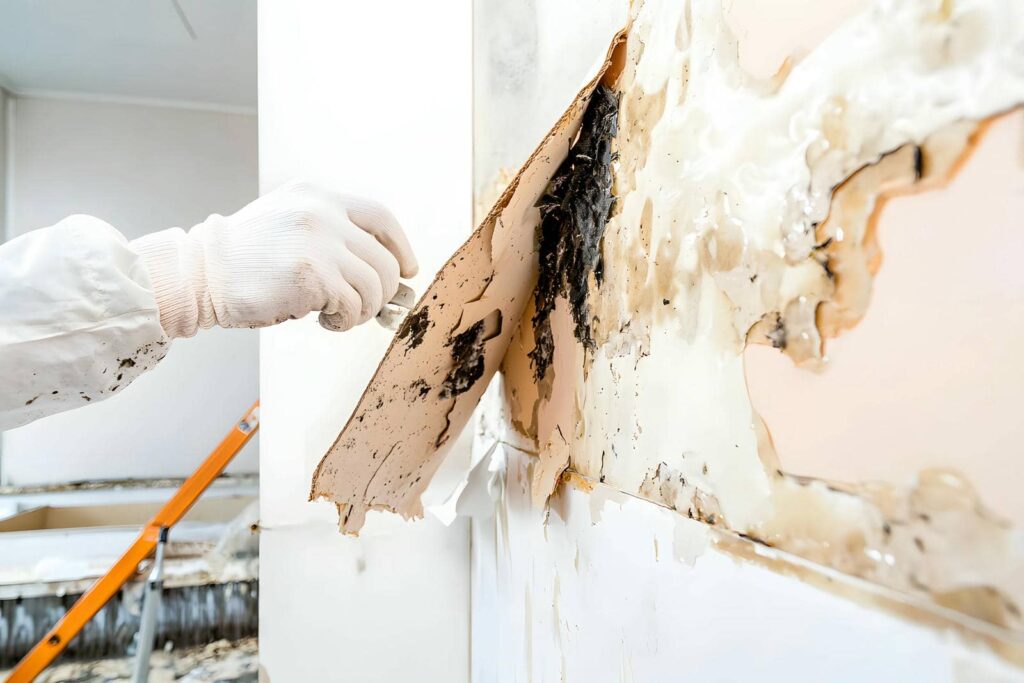
However, porous materials such as drywall or carpets may need more intensive treatment. In these cases, you might need to remove and replace the affected materials, as mold can penetrate deeply.
For persistent mold, consider using a solution of one cup of bleach to one gallon of water, but be cautious with ventilation.
Always wear protective gear during the process, including gloves and a mask.
Finally, make certain you dry the area completely after cleanup; moisture is mold’s best friend, and eliminating it is key to successful mold removal.
Preventing Future Mold Growth
While addressing mold cleanup is essential, preventing future growth is equally important to maintain a healthy environment.
By implementing proactive measures, you can greatly reduce the risk of mold returning. Here are some effective strategies to reflect upon:
Use mold-resistant materials: Opt for mold-resistant paints and drywall in areas prone to moisture, like bathrooms and basements.
Control humidity: Maintain indoor humidity levels below 60% using dehumidifiers and proper ventilation. This helps inhibit mold growth.
Regular inspections: Routinely check for leaks and water damage in your home. Early detection can prevent extensive mold issues.
When to Seek Professional Help
Even with proactive measures to prevent mold growth, situations may arise where professional intervention is necessary. If you discover extensive mold coverage or it’s hidden behind walls or in ducts, it’s time to contemplate a mold inspection.
DIY methods mightn’t adequately address larger infestations, and attempting to handle them yourself can sometimes exacerbate the problem.
Additionally, if anyone in your household has respiratory issues or allergies, professional services become vital. Mold can pose serious health risks, and a certified mold remediation team can ensure a safe and thorough cleanup.
Another red flag is if the mold returns quickly after cleanup. This often indicates underlying moisture issues that need expert resolution.
Trusting professionals helps eliminate mold and prevent future outbreaks, safeguarding your home and health. Don’t hesitate to seek help when the situation goes beyond your control.
Final Thoughts
Tackling mold cleanup after water damage is essential for your health and home. By following the tips outlined—assessing damage, ensuring safety, employing effective removal techniques, and preventing future issues—you can greatly reduce your risks. Regular monitoring and quick action can help keep your indoor environment safe and mold-free, protecting both your well-being and property value.
Recent Posts
What Is Soot Odor Mold Restoration?
After a kitchen fire leaves soot on your walls and a musty smell in the
What Repairs Stop Mold After Water Damage
To Stop Mold After Water Damage, you need to fix the moisture source first, then
Why Does Leak Water Damage Cause Mold?
Like a slow leak in a ship’s hull, water damage in your home keeps feeding