
Contents
A ceiling leak can turn a small drip into a major repair in no time. You need to stop the water source fast, check the ceiling for sagging or collapse risk, and dry the area with fans and dehumidifiers. Then you can remove damaged material and patch it correctly, but one step can make all the difference if the leak keeps coming back…
Key Takeaways
- Stop the leak immediately by shutting off the water supply and catching drips with a bucket or tarp.
- Inspect the ceiling for sagging, bulging, or cracked areas before touching any damaged material.
- Dry the area thoroughly with fans, dehumidifiers, and open windows to prevent mold and further damage.
- Cut out soft or stained ceiling material and replace it with matching drywall after the area is fully dry.
- Call a water damage professional if moisture spreads, insulation is soaked, or you suspect hidden mold.
Stop the Ceiling Leak Fast
Start by catching the leak before it spreads. You’ll need quick leak detection to locate the source, then shut off the nearest supply if water’s active.
Use a bucket or pan to control drips, and place towels around the area. If the leak comes from rain, cover the entry point with a tarp or waterproof patch until you can make a lasting repair.
Take emergency measures immediately: move valuables, unplug nearby electronics, and keep the area clear so you can work safely.
Mark the wet spot so you can track changes. If you’re in a shared home, tell everyone what you’ve done so they can help.
Acting fast gives you control, protects your space, and keeps your team focused.
Check Ceiling Water Damage for Safety
Before you touch the ceiling, check for signs that the water damage has weakened the structure. Look for sagging drywall, bulging paint, cracked seams, and any fresh stains spreading outward.
If the ceiling feels soft, sounds hollow, or shows visible movement, keep clear of the area. Shut off nearby power if water may have reached fixtures, and use safety precautions before stepping on ladders or moving furniture below.
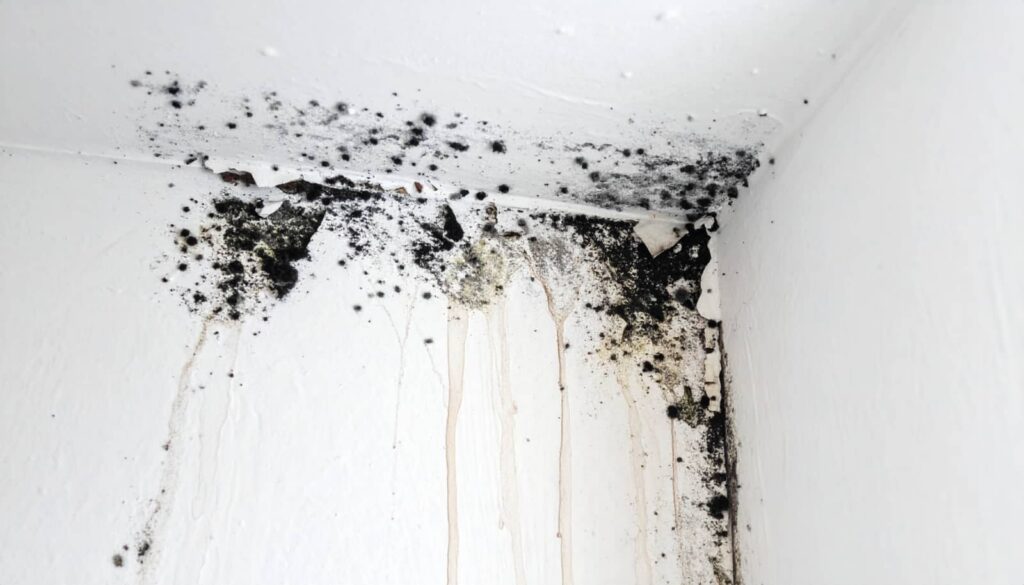
Wear gloves and eye protection, and avoid pressing on damp material. If you see dark spotting or a musty odor, treat it as a mold prevention issue and limit exposure.
Mark unsafe spots, keep children and pets away, and call a qualified pro if the damage looks unstable.
Dry Out Ceiling Water Damage
Once you’ve confirmed the ceiling is safe to approach, dry it as quickly as possible to limit sagging, staining, and mold growth.
Open windows if weather allows, run fans to move air across the wet area, and use a dehumidifier to pull moisture from the room. Aim airflow at the surface, not directly into damaged seams.
Use moisture detection to track progress in hidden spots and keep drying until readings return near normal. If the leak is small, gentle drying techniques may be enough; if the area stays damp, increase circulation and lower indoor humidity.
Keep the room warm, but avoid overheating. Check adjacent walls and insulation for trapped moisture so you and your crew stay ahead of secondary damage together.
Repair Water-Damaged Ceiling Materials
Cut away any ceiling material that’s swollen, soft, stained, or crumbling so you can expose solid edges for repair. Use a utility knife or drywall saw, then remove loose debris and check the framing for hidden damage.
Replace damaged ceiling materials with matching drywall or plaster board, cutting patches to fit tight openings. Secure new pieces to solid backing, tape joints, and apply joint compound in thin coats, letting each coat dry before sanding.
Keep the repaired area dry and ventilated to support mold prevention. Prime patched surfaces before repainting so moisture won’t soak into the new ceiling materials.
Work carefully, measure twice, and keep your repair neat; you’re restoring a safe, clean ceiling space.
When to Call a Water Damage Pro
Call a water damage pro if the leak has soaked insulation, spread behind walls, damaged multiple ceiling sections, or caused sagging, bubbling, or ongoing discoloration.
You’re likely dealing with hidden moisture, mold risk, or compromised framing, and DIY repairs won’t address those issues safely. A certified technician can inspect with moisture meters, map the damage, and dry structural cavities before deterioration worsens.
They’ll also document conditions for insurance claims, which can speed approval and reduce disputes. If you hear dripping after the source is fixed, smell musty air, or see stains return, call immediately.
Professional restoration services help you protect your home, keep your crew of helpers focused, and get your ceiling back to a clean, stable condition.
Frequently Asked Questions
How Do I Prevent Mold After a Ceiling Leak?
Dry the area within 24 hours, then use leak detection to find and fix the source. Remove wet insulation, run fans and a dehumidifier, clean surfaces with detergent, and monitor for mold prevention.
Will Homeowners Insurance Cover Ceiling Leak Repairs?
You’ll usually get insurance coverage if a sudden, accidental leak caused the damage, but not for neglect. Review your policy, document everything, and start the claim process quickly to strengthen your case.
Can I Paint Over a Repaired Water Stain?
Yes, you can paint over it—after you ensure complete dryness, prime the area, and match paint types for stain coverage. Why risk bleed-through? You’ll fit right in with a clean, durable finish.
How Long Does Ceiling Drywall Take to Fully Cure?
You’ll usually wait 24–72 hours for ceiling drywall to dry, but full curing can take 1–2 weeks, depending on humidity and thickness. Use proper drywall drying and repair techniques to avoid future failures.
Should I Replace Insulation After Roof Leak Damage?
Yes—you should replace wet insulation after a roof leak; soaked fiberglass loses insulating value. You’ll need a damage assessment by insulation type, because you can’t reliably dry contaminated batts or blown-in material.
Wrap-Up
A ceiling leak can feel like a storm cloud hanging over your home, but quick action keeps the damage from spreading. Stop the leak, inspect the area safely, dry it thoroughly, and replace damaged materials before mold moves in like an unwelcome guest. If the ceiling stays stained, soft, or wet, call a pro right away. You’ll protect your home, reduce repair costs, and restore a solid, dry ceiling overhead.
Recent Posts
5 Steps for Flood Water Recovery
When floodwater enters your space, you need to act in a strict sequence. Flood Water
How to Restore Water Damage After Flood
After a flood, you’re facing more than a little cleanup, and your first move is
7 Smoke Odor Removal Tips After Water Damage
Smoke odor after water damage can linger in places you’d never think to inspect first.