
Contents
If you notice mold just as floodwater starts to recede, Flood Mold Cleanup needs to begin quickly because you’ve got a narrow window to act. You should first verify safety, then assess damage and remove standing water and wet materials fast. After that, you can dry walls and floors with airflow and dehumidification, clean visible mold, and call a professional if the affected area is large. The next step matters more than you might expect.
Key Takeaways
- Check for hazards first, including standing water, electrical risks, sewage, and unstable flooring, before entering the flooded area.
- Wear protective gear such as gloves, boots, eye protection, and an N95 or mold-rated respirator during cleanup.
- Remove standing water and soaked porous materials quickly to reduce contamination and prevent mold growth.
- Dry walls, floors, and hidden spaces fast using fans, dehumidifiers, and good airflow to limit moisture.
- Clean small mold patches with soap or detergent, but call professionals if mold is widespread or keeps returning.
Check Flood Mold Cleanup Safety First
Before you begin flood mold cleanup, check the area for immediate hazards such as standing water, electrical exposure, unstable flooring, and sewage contamination.
You should stop and secure the site before you enter, because your safety comes first. Wear safety gear that includes gloves, boots, eye protection, and a respirator rated for mold exposure.
If you smell strong odors or see heavy growth, limit time inside and keep others out. Turn off power if water has reached outlets or appliances, and don’t step on soft or warped surfaces.
Work with a partner when possible so someone can call for help if conditions change. By using clear precautions, you protect yourself and support a safer cleanup for everyone nearby.
Assess Flood Damage and Mold Risk
Once the area is safe to enter, assess the flood damage to determine how far water traveled, how long materials stayed wet, and which surfaces now pose a mold risk.
You’ll want to document affected rooms, wall lines, flooring, insulation, and hidden cavities with photos and notes. This water damage assessment helps you identify where mold growth can start within 24 to 48 hours.
Check porous materials, since they absorb moisture and hold contamination longer than hard surfaces. Look for discoloration, swelling, peeling finishes, and musty odor as early indicators.
Compare dry areas with impacted ones so you can prioritize your mold prevention strategies. By mapping the extent of damage now, you’ll make smarter cleanup decisions and protect everyone in your home from avoidable exposure.
Remove Standing Water and Wet Materials
Start by removing standing water as quickly as possible, using pumps, wet vacuums, mops, or absorbent towels to lower indoor humidity and limit further saturation.
You should work methodically, starting in the lowest areas and moving outward so you don’t spread contamination. As you clear the standing water, place wet materials in a designated area for removal, including carpets, insulation, ceiling tiles, and porous items that can’t be cleaned safely.
Bag and label debris so your team can handle it without cross-contamination. Wear gloves, boots, and eye protection, and keep children and pets away from the work zone.
If materials remain soaked after extraction, remove them promptly. Fast action helps your household restore safe conditions and keeps everyone on the same page during cleanup.
Dry Flood-Damaged Walls and Floors
After standing water is removed, you should dry flood-damaged walls and floors immediately to slow mold growth and material deterioration.
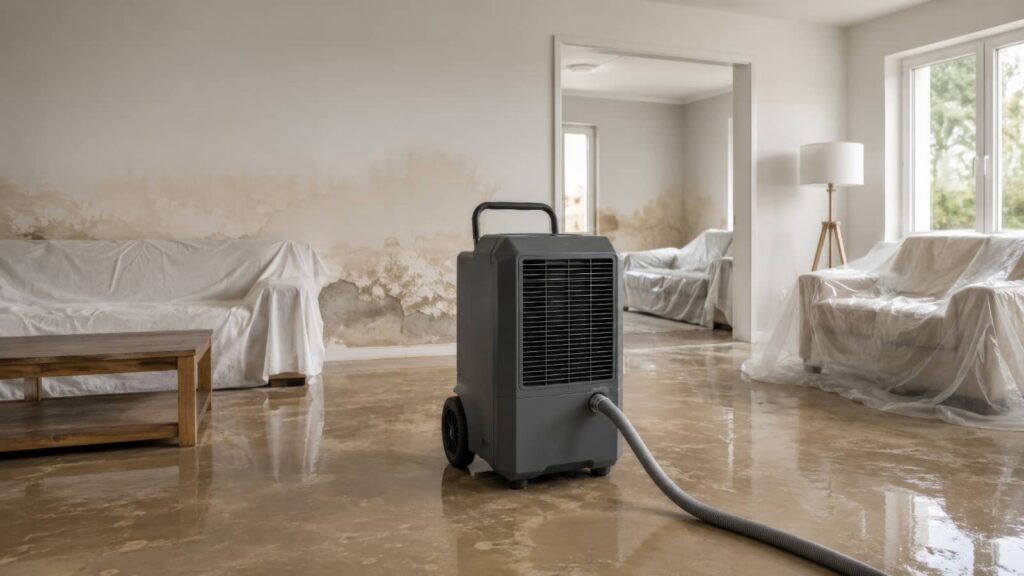
You can improve airflow by opening windows, running fans, and spacing furniture away from wet surfaces. Use dehumidifier usage continuously in closed rooms to pull moisture from the air and help materials dry more evenly.
Check wall insulation, because wet insulation holds water and can keep studs and drywall damp long after the surface feels dry.
If flooring is carpeted, lift edges so air reaches the backing and subfloor. For wood or concrete, monitor moisture with a meter until readings return to normal.
Keep the area warm, ventilated, and organized so you and your household can stay focused on safe recovery together.
Clean Mold and Call a Pro if Needed
When surfaces are dry enough to work on, clean visible mold promptly with soap and water or a detergent solution, then rinse and dry the area thoroughly.
Wear gloves, goggles, and an N95 respirator during mold removal. Work from the cleanest area toward the dirtiest, and bag contaminated materials so you don’t spread spores.
- Scrub nonporous surfaces until no residue remains.
- Remove and discard porous items that stayed wet.
- Disinfect only after cleaning, if the product label allows it.
- Call for professional assistance if mold covers more than 10 square feet, returns after cleaning, or affects HVAC ducts.
You’re protecting your household and your recovery team by acting quickly, documenting damage, and stopping hidden growth before it spreads further.
Frequently Asked Questions
How Can I Prevent Mold From Returning After Cleanup?
Keep humidity below 60%, fix leaks fast, dry surfaces thoroughly, and use mold-resistant products. You should schedule regular inspections, improve ventilation, and replace contaminated materials promptly so mold won’t return.
Should I Throw Away Food Exposed to Floodwater?
Yes, you should throw away food exposed to floodwater; it’s not safe. During flood recovery, prioritize food safety: discard opened, damaged, or nonsealed items, and keep sealed commercial cans only if undamaged and sanitized.
How Soon Should I Contact My Insurance Company?
Contact your insurance company immediately, ideally within 24 hours; early reporting helps you start the claim process, preserve flood insurance coverage, and document damage before mold spreads. You’re not alone—many policyholders act fast after floods.
Can Electronics Be Safely Saved After Flood Exposure?
Yes, you can sometimes save electronics after flood exposure, but you’ll need a professional electronics assessment first. Don’t power them on. Use controlled drying techniques, then test components carefully for corrosion, contamination, and hidden damage.
What Signs Mean Hidden Mold Is Still Growing?
You’ll suspect hidden mold when you notice a musty odor, recurring stains, warped materials, or worsening health risks. Check humidity levels and use visual inspection; if moisture persists, hidden mold can keep growing after water damage.
Recap
By acting quickly, you can reduce mold growth dramatically after flooding. Mold can begin developing within 24 to 48 hours on wet materials, so prompt cleanup matters. Keep your PPE on, document damage, remove saturated items, and dry walls and floors with ventilation and dehumidifiers. Clean small visible colonies with soap and water, and call a professional if contamination exceeds 10 square feet. Ongoing checks help you prevent recurrence.
Recent Posts
What Repairs Stop Mold After Water Damage
To Stop Mold After Water Damage, you need to fix the moisture source first, then
Why Does Leak Water Damage Cause Mold?
Like a slow leak in a ship’s hull, water damage in your home keeps feeding
Ceiling Leak Water Damage Mold Repair Guide
You notice a ceiling stain the same day a drip starts, and that coincidence matters