
Contents
Minimizing moisture in crawl spaces is essential for maintaining a healthy home environment. Start by evaluating current moisture levels and identifying potential sources. You’ll need to implement effective strategies, such as installing a vapor barrier and improving ventilation. Each step plays a significant role in preventing dampness and mold growth. Understanding the intricacies of these methods can make all the difference. But what specific actions should you prioritize first?
Key Takeaways
- Install a vapor barrier to prevent moisture ingress from the ground; ensure it overlaps and is securely sealed.
- Improve ventilation by installing vents or exhaust fans to promote air circulation and reduce humidity.
- Use a dehumidifier suited for the crawl space’s size and environment to maintain optimal humidity levels.
- Ensure proper drainage by grading the landscape away from the foundation and installing a sump pump.
- Conduct regular inspections for cracks or leaks and perform maintenance to address moisture sources promptly.
Assessing the Current Moisture Levels
How can you effectively assess the moisture levels in your crawl space? Start by identifying potential moisture sources, such as groundwater, leaks, or poor ventilation.
Once you’ve pinpointed these areas, use a reliable humidity measurement tool, like a hygrometer, to gauge the current humidity levels. Ideally, your crawl space should maintain a humidity level below 60%.
Next, inspect visible signs of moisture, including mold growth and water stains, which can indicate higher moisture levels. Document your findings to track changes over time.
Consider conducting assessments during different seasons, as humidity levels can fluctuate.
Engaging in this process helps you understand your crawl space’s moisture dynamics and fosters a sense of belonging in your home maintenance journey.
Installing a Vapor Barrier
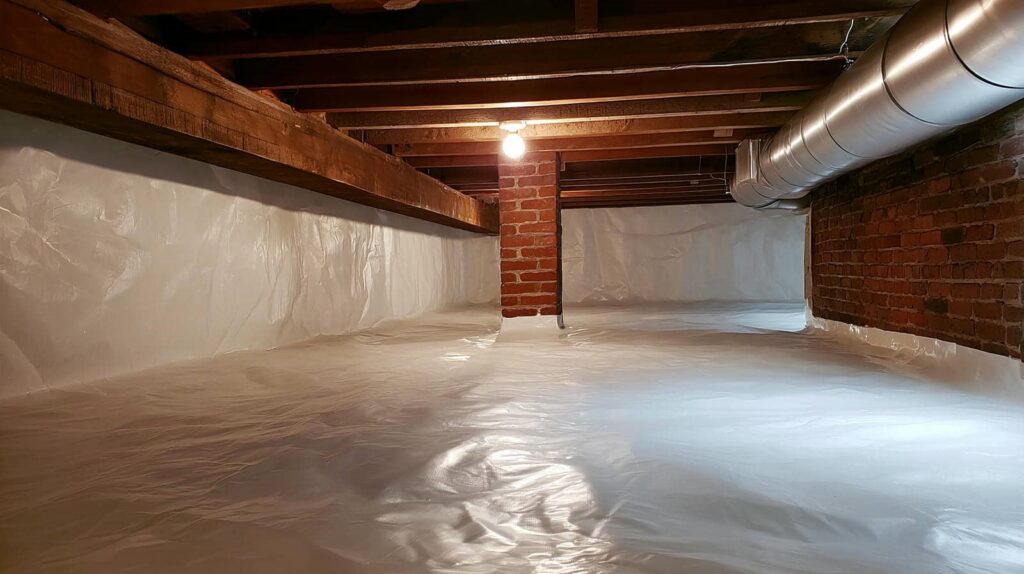
While evaluating moisture levels in your crawl space is essential, installing a vapor barrier is one of the most effective strategies to control humidity and prevent further moisture intrusion. You’ll find various vapor barrier types, including polyethylene sheets, reinforced membranes, and spray-on solutions. Selecting the right type depends on your specific needs and the existing conditions in your crawl space.
For installation, start by cleaning the area, removing debris and sharp objects that could damage the barrier. Measure your crawl space and cut the barrier to size, ensuring it extends up the walls a few inches.
Use installation techniques like overlapping seams and securing edges with adhesive or tape to create a tight seal. Additionally, consider incorporating drainage solutions to divert water away from the barrier.
Improving Ventilation
Are you aware that improving ventilation in your crawl space can greatly reduce moisture levels? Effective airflow strategies are vital for maintaining a dry environment.
You can implement various ventilation methods, such as installing vents or utilizing exhaust fans to promote air circulation. These methods help to exchange warm, humid air with cooler, drier air from outside, reducing moisture accumulation.
Consider the placement of vents to ensure ideal airflow; they should be positioned opposite each other to create a cross-ventilation effect.
Using powered vents can also enhance airflow during humid months. Remember that passive ventilation mightn’t suffice in regions with high humidity, so evaluating your specific conditions is essential.
Utilizing Dehumidifiers
If you want to effectively manage moisture levels in your crawl space, utilizing dehumidifiers is a practical solution.
Choosing the right dehumidifier type—such as refrigerant or desiccant—can greatly impact performance. Refrigerant dehumidifiers work well in warmer environments, while desiccant models are effective in cooler conditions.
Consider energy efficiency as you select your unit; Energy Star-rated dehumidifiers consume less power while providing ideal moisture removal. This helps reduce energy bills and lowers your environmental footprint.
When installing your dehumidifier, place it in a central location for the best airflow, and verify it’s sized appropriately for your crawl space.
Regular maintenance, such as emptying the reservoir or cleaning the filter, will keep your system running efficiently.
Ensuring Proper Drainage
To effectively minimize moisture in your crawl space, it’s essential to ensure proper drainage around your home.
Start by grading your landscape to direct water away from the foundation and consider installing drainage systems where necessary.
These steps can greatly reduce the risk of water accumulation and subsequent moisture issues in your crawl space.
Grading Landscape Appropriately
Properly grading your landscape is essential for ensuring effective drainage, as it directs water away from your home’s foundation and minimizes moisture accumulation in crawl spaces.
Aim for a landscape slope that guides rainfall away, ideally sloping at least six inches over the first ten feet from your foundation. This gradient prevents water from pooling near your home.
Additionally, consider incorporating drainage plants that thrive in wet conditions; they can absorb excess moisture while enhancing your landscape’s aesthetic appeal.
Regularly check for any low spots that may develop and adjust the grading as needed.
Installing Drainage Systems
Effective grading alone may not suffice to manage moisture levels in crawl spaces; installing a reliable drainage system is essential for thorough moisture control.
You should consider various drainage solutions to efficiently channel water away from your foundation. A well-placed sump pump can be a game-changer, as it actively removes excess water that accumulates during heavy rainfall.
Make sure to position the pump in the lowest part of your crawl space for peak effectiveness. Additionally, incorporating drain tiles around the perimeter can prevent water buildup and direct it toward the sump pump.
Sealing Cracks and Openings
Sealing cracks and openings in your crawl space is essential for minimizing moisture intrusion, as even small gaps can lead to significant problems over time.
To effectively tackle this, start with a thorough inspection of your crawl space. Identify areas where water can enter, such as gaps around pipes, vents, or foundation walls. For crack sealing, use high-quality caulk or foam sealant designed for exterior applications, ensuring a tight seal that prevents moisture penetration.
For opening repairs, consider using weatherproof materials to reinforce structural integrity. Pay particular attention to joints and seams, as these are common points of vulnerability.
After sealing, regularly inspect these areas to verify your repairs hold up against the elements. By prioritizing crack sealing and opening repairs, you protect your home’s foundation and contribute to a healthier living environment for you and your family.
Insulating the Crawl Space
Although insulating the crawl space might seem like an extra step, it plays a crucial role in controlling moisture levels and improving energy efficiency. Proper crawl space insulation helps create a barrier against outside humidity, preventing moisture from seeping into your home.
By insulating the walls and floors of your crawl space, you reduce temperature fluctuations that can lead to condensation.
Using materials like fiberglass or foam board can enhance moisture control while also providing additional comfort and reducing energy bills. When selecting insulation, verify it’s appropriate for your climate and consider the potential for mold growth.
In addition, be mindful of venting your crawl space properly to maintain airflow while still benefiting from the insulation.
Ultimately, investing in crawl space insulation protects your home from moisture-related issues and fosters a healthier living environment for you and your family.
Regular Maintenance and Inspections
To effectively manage moisture levels in your crawl space, regular maintenance and inspections are essential. Establishing a maintenance schedule helps you stay proactive, ensuring that potential issues are addressed before they escalate.
By conducting crawl space inspections at least twice a year, you can identify signs of moisture, such as mold or water stains, and assess the condition of insulation and vents.
During these inspections, pay close attention to drainage systems and the presence of debris, which can hinder water flow and lead to increased humidity. Additionally, check for any cracks or gaps in the foundation that may allow moisture ingress.
Document your findings to track changes over time and facilitate informed decisions about necessary repairs. By committing to a routine of maintenance and inspections, you’ll foster a healthier environment in your crawl space, ultimately enhancing the integrity of your home.
Landscaping Considerations
When planning your landscaping, consider how it impacts moisture levels in your crawl space. Proper landscaping choices can greatly reduce moisture accumulation and promote a healthier environment.
Here are three key considerations:
Choose drainage plants: Select plants that thrive in well-drained soil and can help absorb excess moisture. This reduces humidity while enhancing your landscape’s aesthetic appeal.
Implement proper grading: Verify that your yard slopes away from the foundation. This encourages water runoff and prevents pooling near your crawl space, which can lead to moisture issues.
Use moisture resistant mulch: Apply mulch that resists moisture retention, such as rubber or gravel. This can help regulate soil moisture levels while minimizing the risk of mold and decay in your crawl space.
Professional Mold Remediation Services
When dealing with mold in crawl spaces, a professional assessment is essential to identify the extent of the problem.
Experts utilize effective mold removal techniques tailored to your specific situation, ensuring thorough remediation.
Importance of Professional Assessment
A thorough professional assessment is essential for effectively addressing moisture issues in crawl spaces. You might underestimate the complexities of moisture management, which is where the importance of expertise comes into play.
Professionals can provide a detailed evaluation, ensuring that you fully understand the situation.
Identifying Damage: Experts assess damage that may not be visible to the untrained eye, preventing costly surprises later.
Tailored Solutions: Professionals offer customized recommendations based on their assessments, enhancing your home’s moisture management.
Long-term Safety: Regular assessments ensure ongoing protection against mold and structural issues, safeguarding your investment.
Effective Mold Removal Techniques
Effective mold removal requires a systematic approach, and relying on professional mold remediation services can ensure thorough and lasting results.
These experts utilize advanced techniques to identify mold growth indicators—such as musty odors, visible mold, or water damage—ensuring no areas are overlooked.
They’ll implement mold prevention strategies tailored to your specific environment, including improved ventilation and moisture control solutions.
Conclusion
By taking proactive measures to minimize moisture in your crawl space, you protect your home’s structural integrity and safeguard your health. It’s important to recognize that even small moisture issues can escalate into significant problems, such as mold growth and wood rot. Regular assessments and effective solutions, like vapor barriers and proper drainage, are vital. Ultimately, a well-maintained crawl space can lead to a healthier living environment, proving that prevention is indeed better than remediation.
Recent Posts
What Repairs Stop Mold After Water Damage
To Stop Mold After Water Damage, you need to fix the moisture source first, then
Why Does Leak Water Damage Cause Mold?
Like a slow leak in a ship’s hull, water damage in your home keeps feeding
Ceiling Leak Water Damage Mold Repair Guide
You notice a ceiling stain the same day a drip starts, and that coincidence matters