
Contents
Crawl spaces can easily become a breeding ground for mold if not properly managed. You need to focus on maintaining proper ventilation and controlling humidity levels to create an unfriendly environment for mold growth. Installing a high-quality vapor barrier is essential, as is regularly inspecting for water leaks. But there’s more to it than just these basics. Understanding the full scope of prevention can make a significant difference in your crawl space’s health.
Key Takeaways
- Maintain proper ventilation by inspecting systems and using dehumidifiers to enhance airflow and reduce moisture.
- Control humidity levels consistently with dehumidifiers and seal gaps to prevent humid air intrusion.
- Install a high-quality vapor barrier, ensuring it covers the ground and walls to prevent moisture seepage.
- Regularly inspect for water leaks and ensure adequate drainage away from the foundation to avoid moisture accumulation.
- Implement a cleaning schedule to keep the crawl space dry and free from organic materials that promote mold growth.
Maintain Proper Ventilation
When it comes to preventing mold in your crawl space, maintaining proper ventilation is essential. Good airflow optimization helps keep your space dry and less prone to mold growth.
Start by inspecting your existing ventilation systems. Verify vents are unobstructed and positioned correctly to promote airflow. You might consider installing additional vents or using exhaust fans to enhance circulation.
If your crawl space is particularly damp, a dehumidifier can work wonders alongside your ventilation systems. Regularly check for leaks or water intrusion, as these can drastically affect ventilation efficiency.
If you notice stagnant air or musty odors, it’s a sign that airflow isn’t adequate.
Taking these steps protects your home and fosters a sense of belonging among family and friends, ensuring a safe and healthy living environment.
Prioritizing proper ventilation means you’re investing in your well-being and that of your loved ones.
Control Humidity Levels
To effectively control humidity levels in your crawl space, consider using dehumidifiers regularly to reduce excess moisture.
You’ll also want to seal any ventilation gaps, as these can allow humid air to enter and contribute to mold growth.
Keeping humidity in check is essential for preventing mold and maintaining a healthy environment.
Use Dehumidifiers Regularly
Using dehumidifiers regularly is crucial for controlling humidity levels in your crawl space, especially in areas prone to moisture.
For effective humidity control, pay attention to dehumidifier placement; ideally, it should be positioned in the center of the space for maximum airflow.
Verify the unit’s capacity matches your crawl space size—too small won’t effectively reduce humidity.
Check the humidity levels frequently with a hygrometer to adjust the dehumidifier settings as needed.
It’s also helpful to run the dehumidifier continuously during damp months.
By maintaining a consistent humidity level, you’ll prevent mold growth and create a healthier environment for your home.
Your diligence in this area fosters a sense of community well-being and shared responsibility.
Seal Ventilation Gaps
Sealing ventilation gaps is a vital step in controlling humidity levels in your crawl space. When you leave gaps unsealed, moisture can seep in, creating a perfect environment for mold growth.
Start by inspecting your current ventilation systems for any openings or cracks. Use high-quality caulk or foam insulation for gap sealing to block unwanted air and moisture entry.
Pay special attention to areas around pipes and ducts, as these are common trouble spots. By effectively sealing these gaps, you’ll reduce humidity and enhance your home’s overall energy efficiency.
This proactive approach fosters a healthier living environment. Remember, a well-sealed crawl space is essential for preventing mold and maintaining the integrity of your home.
Install a Vapor Barrier
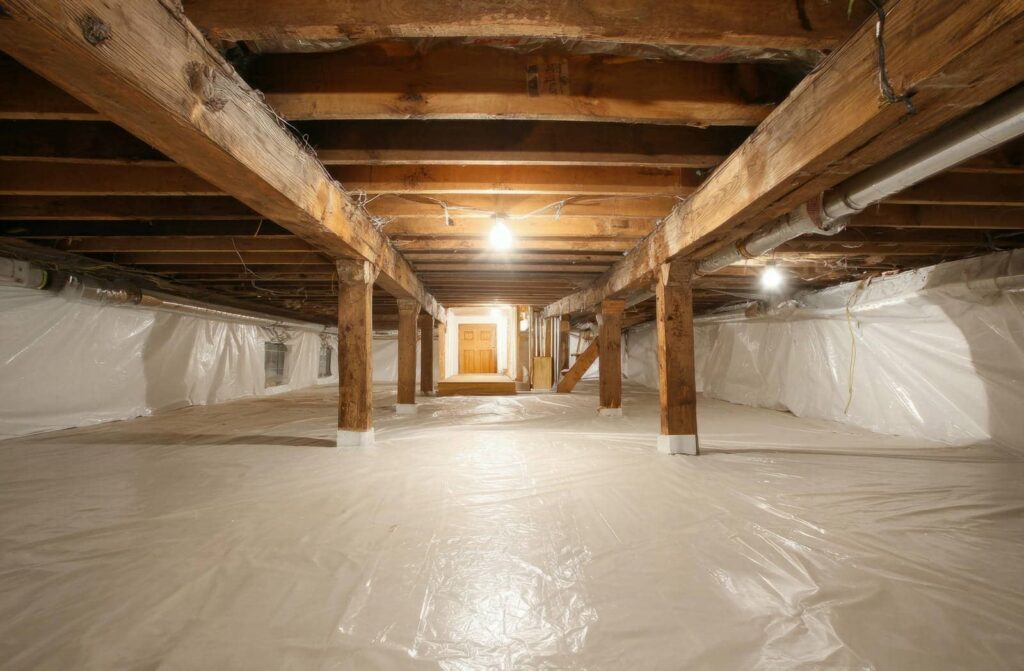
One effective way to prevent mold growth in your crawl space is by installing a vapor barrier. This barrier helps keep moisture out, making your home safer and more comfortable.
Choosing the right vapor barrier materials and using proper installation techniques are essential for effectiveness.
Here are some tips to ensure a successful installation:
Select high-quality vapor barrier materials: Look for thick polyethylene sheets or specialized products designed for crawl spaces.
Clean the crawl space: Remove debris and standing water before installation.
Cover the entire ground: Confirm the barrier extends up the walls and covers all exposed areas.
Seal seams and edges: Use tape or adhesive to secure overlaps and edges for maximum moisture prevention.
Check for punctures: Inspect your barrier regularly and repair any damage promptly.
Regularly Inspect for Water Leaks
To prevent mold in your crawl space, regularly inspect for water leaks.
Start by checking plumbing connections for any signs of dampness, then monitor roof drainage to ensure water flows away from your home.
Finally, inspect foundation walls for cracks or moisture, as these can lead to bigger issues if left unchecked.
Check Plumbing Connections
Regularly checking your plumbing connections is essential for preventing mold in your crawl space.
By staying on top of plumbing maintenance, you can catch potential leaks early and avoid costly damage.
Here are some key steps to ensure effective leak detection:
- Inspect pipes for visible signs of water damage or corrosion.
- Check connections and fittings for any drips or moisture.
- Look for water stains on walls or floors near plumbing fixtures.
- Monitor water pressure; sudden changes can indicate a problem.
- Schedule routine professional inspections to catch hidden issues.
Monitor Roof Drainage
Monitoring roof drainage is essential to preventing water leaks that can lead to mold growth in your crawl space.
Start by examining your roof design and ensuring it effectively channels water away from your home. Regularly inspect drainage systems, including gutters and downspouts, for clogs or damage.
Make sure they’re positioned to direct water at least six feet away from your foundation. If you notice any leaks or pooling water, address them immediately.
Consider installing splash blocks or extensions to enhance drainage away from your home.
Inspect Foundation Walls
Inspecting your foundation walls is an essential step in preventing moisture intrusion and mold growth in your crawl space. Regular foundation inspections help you identify potential issues before they escalate.
Look for signs of wall moisture and leaks that could lead to serious problems. Here are some key points to take into account during your inspections:
- Check for cracks or gaps in the walls.
- Look for discoloration or staining caused by moisture.
- Inspect the area around windows and doors for leaks.
- Assess the grading around your foundation to ensure proper drainage.
- Confirm gutters and downspouts direct water away from your home.
Ensure Adequate Drainage
To prevent mold growth in your crawl space, ensuring adequate drainage is essential. Start by evaluating your drainage systems. Make sure gutters and downspouts direct water away from your home’s foundation. If water flows toward your crawl space, you’re setting the stage for mold development.
Consider installing a French drain or a sump pump to manage excess water effectively. These systems help redirect water flow, keeping your crawl space dry. Check for any blockages in your drainage systems regularly, as debris can hinder water movement and lead to pooling.
Additionally, grading your yard can also make a big difference. Aim for a slope away from your foundation to guide water away.
Use Mold-Resistant Materials
While you may not think about the materials in your crawl space, using mold-resistant options can greatly reduce the risk of mold growth.
Choosing the right materials protects your home and creates a healthier environment for you and your family.
Here are some effective mold-resistant options you should consider:
Mold-resistant paints: These paints create a barrier that helps prevent mold from taking hold on walls and surfaces.
Moisture-resistant insulation: This type of insulation helps manage humidity and keeps moisture levels low, minimizing mold growth.
Synthetic building materials: Opt for materials like PVC or fiberglass, which are less prone to mold than traditional wood.
Sealed vapor barriers: Installing vapor barriers can help control moisture levels in your crawl space.
Non-organic materials: Use non-organic materials for flooring and storage to discourage mold growth.
Keep the Crawl Space Clean and Dry
Keeping your crawl space clean and dry is vital for preventing mold growth and maintaining a healthy home environment. Start by implementing a regular cleaning schedule to eliminate dust, debris, and any organic materials that could foster mold.
Make it a habit to inspect your crawl space every few months.
Organize your crawl space by storing items in waterproof bins and keeping them off the ground. This promotes crawl space organization and helps improve air circulation, reducing moisture levels.
Consider installing a vapor barrier to prevent moisture from seeping in, and make certain any leaks are promptly addressed.
If you notice any standing water, it’s imperative to act quickly—this can be a breeding ground for mold.
Monitor Temperature Fluctuations
Since mold thrives in damp and warm environments, monitoring temperature fluctuations in your crawl space is crucial for prevention.
By keeping an eye on temperature changes, you can take proactive measures to reduce humidity and avoid mold growth.
Here are some practical tips for effective temperature monitoring:
- Invest in a reliable thermometer or hygrometer to track conditions.
- Regularly check the temperature during seasonal adjustments, especially in spring and fall.
- Verify proper insulation to minimize heat loss and maintain a stable environment.
- Use a dehumidifier when necessary to control humidity levels.
- Seal any gaps or cracks to prevent outside air from entering and causing fluctuations.
Wrap-Up
By maintaining proper ventilation, controlling humidity levels, and installing a vapor barrier, you’re setting the stage for a mold-free crawl space. Regularly inspecting for leaks, ensuring adequate drainage, and using mold-resistant materials keeps moisture at bay. Keeping the area clean and dry, along with monitoring temperature fluctuations, creates an environment where mold can’t thrive. With these proactive measures, you’re not just preventing mold; you’re safeguarding your home and enhancing its longevity. Stay vigilant and stay mold-free!
Recent Posts
What Repairs Stop Mold After Water Damage
To Stop Mold After Water Damage, you need to fix the moisture source first, then
Why Does Leak Water Damage Cause Mold?
Like a slow leak in a ship’s hull, water damage in your home keeps feeding
Ceiling Leak Water Damage Mold Repair Guide
You notice a ceiling stain the same day a drip starts, and that coincidence matters