
Contents
When you spot mold after roof water damage, you need to act fast, but not recklessly. You can’t assume the visible stain is the full extent of the problem, since hidden moisture often lingers behind drywall, insulation, and framing. The key is to stop further intrusion, dry the affected area, and clean the contamination without spreading spores. What you do next will determine whether the damage stays contained or turns into a larger repair.
Key Takeaways
- Stop the roof leak immediately and dry the area with fans and dehumidifiers.
- Look for musty odors, stains, warped materials, and hidden dampness to detect mold.
- Wear gloves, eye protection, and an N95 respirator before cleaning affected surfaces.
- Remove and replace porous materials like wet drywall or insulation that cannot be fully dried.
- Call a mold professional if contamination is widespread, hidden, or causing health concerns.
Signs of Mold After a Roof Leak?
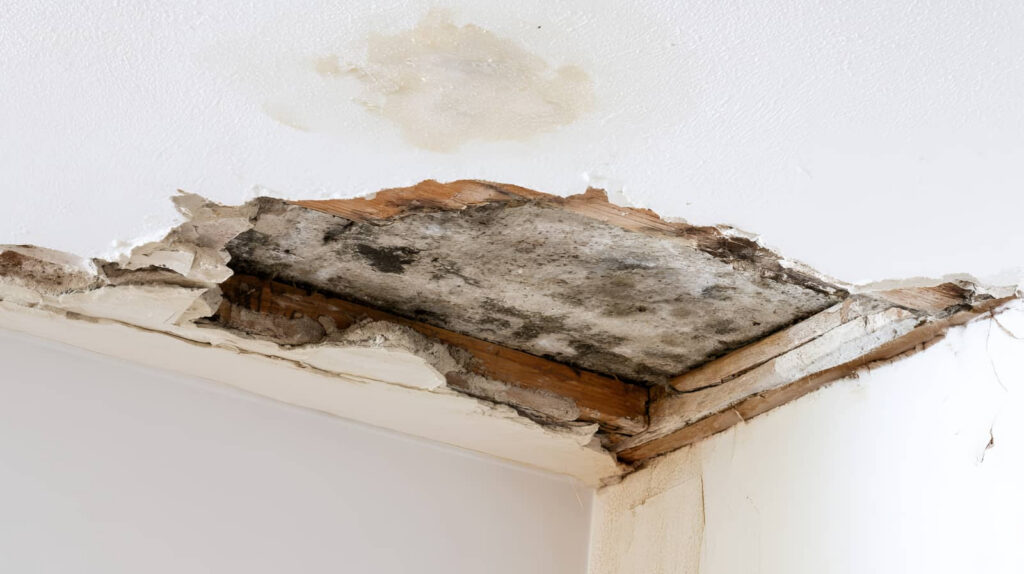
After a roof leak, mold often appears first as a musty odor, then as visible discoloration on ceilings, walls, insulation, or attic framing.
You may notice black, green, gray, or white patches that spread irregularly, especially around joints, seams, and fasteners.
Softened drywall, bubbling paint, warped wood, and damp insulation also signal hidden growth.
Different mold types can look similar, so don’t rely on color alone.
Use moisture detection, including a meter or infrared scan, to identify suspect areas behind finishes.
If you live in a shared home or community, you’re not alone—these signs are common after roof failures.
Promptly documenting the location, size, and texture of affected materials helps you assess severity and plan the next cleanup step with confidence.
Stop the Leak and Dry the Area Fast
First, you need to locate the leak source and stop the water intrusion at once to prevent further mold growth.
Then remove standing water and dry wet materials with high-volume air movement and dehumidification.
Any porous item that stays saturated can support mold, so you should dry or remove it quickly.
Locate Leak Source
Before you clean up mold, you need to stop the water at its source and dry the area as fast as possible.
Start with a methodical leak detection process: trace stains upward, check attic framing, and inspect flashing, vents, valleys, and penetrations.
During a roofing inspection, look for cracked shingles, lifted edges, missing sealant, damaged underlayment, and clogged gutters that can force water inward.
Use a hose test if the leak isn’t obvious, and watch for active drips or damp sheathing. You’re not guessing here; you’re verifying the entry point so your team can act fast and stay coordinated.
Once you locate the source, mark it clearly and arrange immediate repairs before moisture spreads into hidden cavities and drives mold growth.
Dry Wet Materials
Once you’ve identified and marked the leak source, shut off the water intrusion and dry the affected materials as fast as possible.
Remove standing water, then open cavities, baseboards, and insulation so air can reach wet surfaces. Use fans, dehumidifiers, and targeted heat to accelerate evaporation while maintaining moisture control.
You should prioritize porous materials like drywall, ceiling boards, and insulation; if they stay saturated beyond 24 to 48 hours, replace them.
Wipe nonporous surfaces with clean cloths and monitor humidity daily. Effective drying techniques reduce mold risk and help you stay aligned with a safe, coordinated cleanup process.
Document progress, verify no hidden dampness remains, and keep the work area isolated until readings return to normal.
Clean Mold Safely After Roof Water Damage
After roof leaks, you need to clean mold only after you stop the water source, dry the affected materials, and confirm the area is safe to enter.
Wear gloves, eye protection, and an N95 respirator before you start. You can protect your home group by isolating the workspace with plastic sheeting and running ventilation away from clean areas.
Use mold removal techniques suited to the surface: scrub nonporous materials with detergent and water, then wipe dry; discard porous items that stay contaminated.
Keep safety precautions strict by misting surfaces lightly to limit dust, cleaning from the least dirty area to the most contaminated, and bagging debris immediately.
Finish by drying the area again and checking for remaining staining or odor.
Know When to Call a Mold Pro
If mold has spread across multiple rooms, inside wall cavities, or over a large surface area, you need a mold professional to assess and contain the damage.
You should also call a pro when you notice hidden moisture signs like warped materials, persistent odors, or recurring dampness after cleanup.
If anyone in the home has asthma, allergies, or other respiratory symptoms, treat it as a health risk and get expert help promptly.
Severe Mold Spread
When mold has spread beyond a small, contained area, you need professional remediation rather than a DIY cleanup. You’re likely dealing with multiple mold types, including allergenic and potentially toxigenic growth, and that calls for controlled containment, HEPA filtration, and source correction.
If colonies cover several square feet, you shouldn’t scrub or disturb them; doing so can aerosolize spores and increase exposure for everyone in your home. A certified team can assess severity, remove contaminated materials, and verify that cleanup meets standards. That’s how you protect your space and stay confident in the process.
Afterward, you can focus on prevention methods that reduce recurrence, such as repairing roof leaks promptly, improving ventilation, and keeping indoor humidity low.
Hidden Moisture Signs
Hidden moisture often hides behind walls, under flooring, and inside insulation, where it can keep feeding mold even after visible surfaces look dry.
You’ll want to watch for warped trim, musty odors, bubbling paint, and recurring damp spots that return after drying. Those clues often mean you need hidden moisture detection, not just surface cleanup.
Use moisture meter usage to verify readings in suspect areas, especially around roof leaks, ceiling seams, and baseboards. If readings stay elevated, or if materials feel cool and heavy, the structure may still hold water.
That’s when you should call a mold pro. You’re not overreacting; you’re protecting your home, your crew, and the repair timeline with disciplined, data-driven action.
Health Risk Warnings
Mold cleanup can become a health issue fast, especially if you notice persistent coughing, wheezing, throat irritation, headaches, skin rashes, or worsening asthma symptoms after water damage.
Those signs point to possible mold health effects and active exposure. If you or anyone in your home has allergies, asthma, immune suppression, or chronic respiratory issues, treat the area as hazardous.
Don’t dry-scrub visible growth or run fans that spread spores. Seal off the room, reduce traffic, and call a mold pro when contamination covers more than a small patch, smells linger, or symptoms improve when you leave.
You deserve a safe, healthy space, and a certified specialist can test, contain, and remove the source with the right controls.
Repair Ceiling Damage After a Roof Leak
After you stop the roof leak and dry the area, inspect the ceiling for staining, sagging, cracked drywall, and soft spots that indicate water damage has compromised the material.
You’ll need to cut out all damaged sections, square the edges, and replace them with matching drywall for a clean ceiling repair. Use joint tape, setting compound, and light sanding to restore a flush surface.
If the joists or fasteners shifted, resecure them before patching.
- Measure the damaged area accurately.
- Match drywall thickness and texture.
- Prime the repaired surface before repainting.
Work methodically so your space feels solid again.
If the ceiling shows widespread water damage, replace the full panel instead of patching small sections; that gives you a safer, more consistent result.
Prevent Mold After Roof Leaks
Once you’ve repaired the roof leak, you need to stop residual moisture from creating mold growth by drying the structure completely, removing contaminated porous materials, and cleaning all affected hard surfaces with an appropriate antimicrobial solution.
You should run dehumidifiers and air movers until framing, insulation, and sheathing reach safe moisture levels. Inspect hidden cavities, attic corners, and drywall seams for dampness, because mold often begins there.
Follow proven mold prevention techniques by sealing minor gaps, improving ventilation, and verifying that insulation stays dry.
You should also use roof maintenance tips: clear gutters, replace damaged shingles, and schedule seasonal inspections.
When you act quickly and methodically, you protect your home and join other prepared owners who keep their spaces healthy, stable, and mold-resistant.
Frequently Asked Questions
How Long Does Mold Take to Grow After a Roof Leak?
Mold can start growing within 24 to 48 hours after a roof leak, so you should act fast. Your mold growth timeline depends on moisture, temperature, and materials, making roof leak prevention essential.
Can I Stay in My House During Mold Cleanup?
You can stay if containment is tight, ventilation is controlled, and you follow cleanup precautions. Prioritize mold safety, isolate affected rooms, and leave if you’re immunocompromised, symptomatic, or smell widespread mildew.
Is Roof Leak Mold Covered by Homeowners Insurance?
Usually, you’re covered only if the leak’s sudden and accidental; gradual seepage often isn’t. Review your policy, document damage, file insurance claims promptly, and follow mold prevention tips to protect your home and community.
Do Air Purifiers Help After Roof Water Damage?
Yes, air purifiers can help after roof water damage. When you’ve got a damp bedroom and coughing kids, HEPA units improve air quality by trapping mold spores, but you’ll still need drying and cleanup.
Should Attic Insulation Be Replaced After Mold Exposure?
Yes, you should replace attic insulation after mold exposure if it’s contaminated, because insulation effectiveness drops and mold remediation can’t reliably decontaminate porous materials. You’ll protect your home and feel confident with a cleaner, safer attic.
Conclusion
When you spot stains, musty odors, or peeling paint after a roof leak, act fast. You should stop the water source, dry the area completely, and clean any visible mold with the right method for the surface. For example, if a bedroom ceiling stays damp for 48 hours after a storm, mold can spread behind the drywall. If damage is extensive or your health is at risk, call a mold professional.
Recent Posts
5 Steps for Flood Water Recovery
When floodwater enters your space, you need to act in a strict sequence. Flood Water
How to Restore Water Damage After Flood
After a flood, you’re facing more than a little cleanup, and your first move is
7 Smoke Odor Removal Tips After Water Damage
Smoke odor after water damage can linger in places you’d never think to inspect first.